
The zipSTOP zip line brake utilizes advanced magnetic technology to provide a smooth and consistent deceleration for riders of all sizes. This system eliminates the need for rider participation, which minimizes human error and significantly increases operational throughput. By investing in this industry-standard equipment, operators ensure a high level of safety and visitor satisfaction.
Selecting the right zipSTOP zip line brake model
Choosing the correct braking unit depends primarily on your arrival speeds and the specific layout of your landing platform. Each model is engineered to handle different velocity ranges to ensure maximum safety and performance.
Which zipSTOP zip line brake is best for standard speeds?
The standard model is ideal for lines with arrival speeds up to 36 kph. It provides a reliable primary braking solution for shorter or lower-angle lines found in most adventure parks. This unit is the foundation of magnetic braking technology in the recreation industry.
What are the benefits of the zipSTOP IR model?
The zipSTOP IR features an internal reduction system that handles arrival speeds up to 60 kph. It eliminates the need for complex external pulleys, making it a compact and low-maintenance choice for fast lines. This model simplifies installation while maintaining high-velocity braking power.
When should you use the zipSTOP speed unit?
The zipSTOP SPEED is the flagship model designed for high-velocity lines reaching 72 kph. It requires an external 2:1 reduction line to provide the robust braking force needed for extreme arrivals. This unit is the ultimate choice for long-distance, gravity-fed commercial lines.
- Standard Model: Best for speeds up to 36 kph.
- IR Model: Best for speeds up to 60 kph without external rigging.
- SPEED Model: Best for high-velocity lines up to 72 kph.
Comparing zipSTOP zip line brake models
| Model | Max Arrival Speed | Reduction Type | External Line Required |
| zipSTOP Standard | 36 kph (22 mph) | 1:1 or 2:1 External | Optional |
| zipSTOP IR | 60 kph (37 mph) | 2:1 Internal | No |
| zipSTOP SPEED | 72 kph (45 mph) | 2:1 Internal + External | Yes |
Selecting the right device is only the first step in creating a comprehensive and fail-safe termination zone for your guests.
-
Product on sale
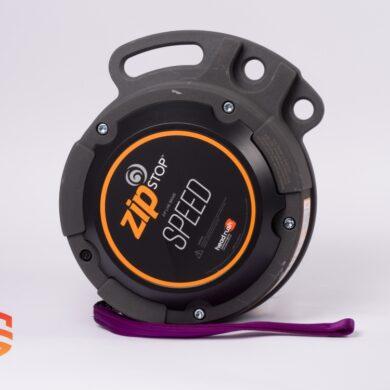 zipSTOP SPEED | High-Velocity Magnetic Braking SystemPrice range: € 6.198,00 through € 6.455,00 Ex VAT
 -
Product on sale
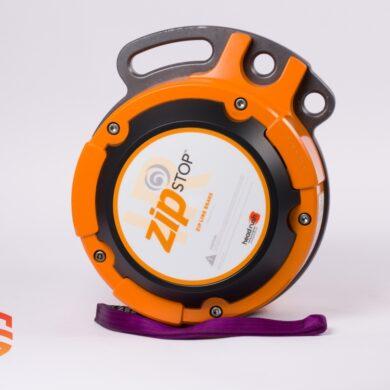 zipSTOP IR Zip Line Brake | Internal Reduction for High-Speed ArrivalPrice range: € 5.742,00 through € 5.894,00 Ex VAT
 -
Product on sale
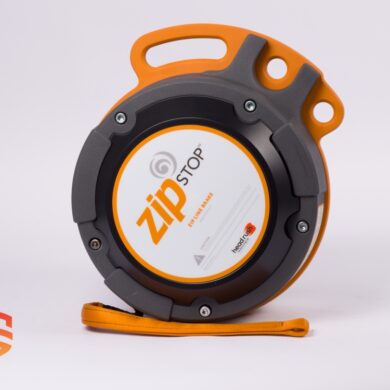 zipSTOP Zip Line Brake | Magnetic Braking SystemPrice range: € 5.334,00 through € 5.538,00 Ex VAT
Integrating emergency arrest devices for total safety
Redundancy is a critical requirement for professional zipline operations to protect against primary system failures. An emergency arrest device (EAD) acts as a fail-safe backup to ensure rider safety at all times.
How does a zipline spring brake work as an EAD?
A zipline spring brake consists of stainless steel springs and spacers that provide mechanical resistance upon impact. When used as an EAD, it stays compressed at the end of the line to stop riders safely if the primary brake fails. It is a cost-effective and highly durable safety component.
Why is a spring brake a reliable backup option?
Unlike complex mechanical systems, a spring brake relies on simple physics and weather-resistant materials. It requires minimal maintenance and can be easily retrofitted onto existing cables for immediate safety gains. This ensures your course remains compliant with international safety standards.
Can you use a spring brake as a primary system?
While possible on low-speed lines, using it as a secondary EAD alongside a zipSTOP zip line brake is the best practice. This combination provides a smooth primary stop and a robust mechanical backup for emergencies. It creates a professional and secure environment for all visitors.
- Redundancy: Provides a critical second layer of protection.
- Durability: Resistant to UV, rain, and extreme temperature changes.
- Simplicity: Easy to inspect and maintain during daily operations.
Reliable hardware is essential, but understanding the underlying technology helps operators maximize the lifespan of their equipment.

Technical advantages of magnetic braking technology
Magnetic braking represents a significant leap forward from traditional friction-based systems. By using eddy currents, these devices offer unmatched consistency regardless of environmental conditions or rider weight variances.
How does eddy current technology improve braking?
The zipSTOP zip line brake creates resistance by moving conductive surfaces through a magnetic field. This force is self-regulating, meaning it automatically adjusts for different rider weights. It delivers a consistent g-force experience for every guest on the course.
Why is magnetic braking better than friction pads?
Friction-based brakes wear down quickly and change performance when wet or hot. Magnetic systems are non-contact, which eliminates brake fade and drastically reduces the need for replacement parts. This results in a much lower total cost of ownership.
How does automatic reset increase profit?
The device automatically retracts the braking line after every rider, allowing for faster cycle times. Guides spend less time resetting equipment and more time engaging with visitors, leading to higher throughput. This efficiency directly translates to increased daily revenue for the operator.
- Self-Regulating: No manual adjustments needed for different weights.
- Non-Contact: Reduced wear and tear on internal components.
- Weatherproof: Performance stays stable in rain, snow, or heat.
Advanced technology ensures a high-quality experience, but regular upkeep is necessary to maintain warranty and safety compliance.
Maintenance and operational efficiency for professionals
Maintaining your equipment is vital for ensuring the longevity of your investment and the safety of your guests. A proactive service schedule minimizes operational downtime and keeps your park running smoothly.
What are the annual service requirements?
Every zipSTOP zip line brake must undergo an annual recertification by an authorized service center. This process ensures all internal components are calibrated and safety-critical parts are in peak condition. Regular servicing is mandatory to comply with industry standards.
Which parts are field-replaceable by staff?
The braking webbing and the bumper are designed as sacrificial wear parts that staff can replace on-site. Daily visual inspections allow teams to identify wear before it affects operational uptime. This modular design ensures that maintenance is fast and simple.
How do you optimize the braking zone layout?
Properly calculating the braking distance involves considering the maximum line extension of the internal webbing. Operators must ensure a safety buffer exists before the rider reaches the emergency arrest device. A well-designed zone prevents abrupt stops and improves the guest experience.
- Annual Recertification: Keeps the device in legal and technical compliance.
- Webbing Replacement: Quick on-site fixes to maintain high throughput.
- Daily Inspections: Early detection of wear to prevent unexpected closures.
By following these professional guidelines, you can ensure that your facility offers the safest and most efficient zipline experience possible.
Advanced solutions for professional zipline braking systems
The zipSTOP zip line brake is the premier choice for professional operators seeking to optimize safety and profit. By pairing magnetic technology with a reliable spring brake EAD, you create a world-class attraction. Focus on regular maintenance to ensure your equipment delivers a smooth, high-speed experience for years to come.
Planning a zipline installation? Need expert advice on zipline design?
Get started Today
Frequent Asked Questions
How do I choose the right zipSTOP zip line brake?
You must select a model based on your maximum arrival speed in all weather conditions. The standard model handles up to 36 kph, while the IR and SPEED models are designed for higher velocities. Always ensure your device’s capacity exceeds your fastest possible arrival.
Does the zipSTOP zip line brake require electricity?
No, the device operates entirely on passive magnetic induction and does not need a power source. It utilizes the laws of physics to generate braking force automatically, ensuring it works even during power outages. This makes it a highly reliable safety solution.
How often should I replace the braking webbing?
The webbing should be inspected daily and replaced immediately if you see signs of fraying or wear. Depending on your volume, it is a sacrificial component that typically lasts for thousands of cycles. Keeping spare webbing on hand minimizes operational downtime.
Is an emergency arrest device required by law?
Most industry standards, such as those for aerial adventure courses, require a secondary braking system. Using a zipline spring brake as an EAD provides the necessary redundancy to protect against primary failure. This compliance is essential for insurance and liability protection.
Can the zipSTOP be used in the rain?
Yes, the magnetic braking performance is not affected by moisture, unlike traditional friction brakes. The housing is made of weather-resistant materials to withstand outdoor environments. This allows for consistent operations regardless of the weather.