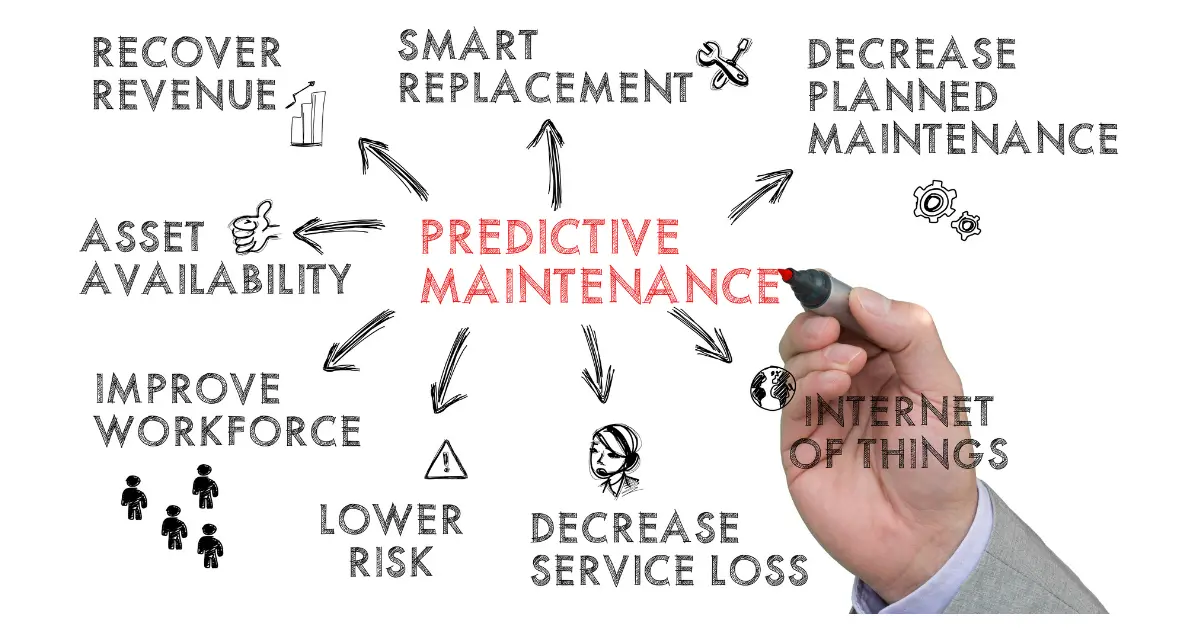
The greatest enemy of an adventure park, family entertainment center, or recreation business is a sudden, unexpected operational shutdown. When a critical ride, a braking system, or a key attraction component fails, it doesn’t just cost money to fix; it destroys the customer experience and leads to lost revenue during crucial operating hours. For too long, maintenance has been a reactive cycle: run it until it breaks, then scramble to fix it. But a new era is here. Professional operators are moving toward Predictive Maintenance for Zero-Downtime Operations—a strategy that uses smart technology to predict failure, allowing you to fix issues before they affect your guests or your bottom line. This isn’t just an upgrade; it’s a complete transformation of how you manage your most valuable assets.
From Reactive Repairs to Proactive Profit
The core problem with traditional, time-based, or reactive maintenance is that it treats equipment failure as an inevitable surprise. You either replace a part based on a fixed schedule (which is often wasteful because the part still has life left) or, worse, wait for a catastrophic breakdown. Both scenarios are inefficient. The modern recreation sector demands a smarter approach, especially given the rising cost of parts, labor, and, most importantly, lost operating time. The shift to a proactive model focuses entirely on uptime, recognizing that every hour an attraction is running safely is an hour generating revenue.
This proactive approach is built on a foundation of data, specifically the real-time operational metrics gathered from your equipment.
It means moving from asking “Is it broken yet?” to “When will this part start to break?” The difference in how you manage your resources – both human and financial – is monumental. By focusing on Predictive Maintenance for Zero-Downtime Operations, you change your maintenance staff from emergency responders to strategic asset managers. They are no longer scrambling to patch up problems but are scheduling precise, efficient repairs during planned, non-operational windows.
The AI Engine: How Sensor Data Powers Prediction
At the heart of Predictive Maintenance for Zero-Downtime Operations is the powerful combination of the Internet of Things (IoT) sensors and machine learning (AI). Your critical equipment, like ropes course trolleys, zip line braking systems, or Ferris wheel carriages, is outfitted with small, rugged sensors. These sensors aren’t just measuring “on” or “off”; they’re gathering a continuous stream of nuanced data about the physical health of the component.
Consider a magnetic braking system, a critical safety component. Traditional maintenance might check it monthly. With predictive maintenance, sensors are constantly tracking subtle, critical metrics:
- Vibration Analysis: An increase in micro-vibrations can indicate bearing wear, misalignment, or an early structural crack long before a human can hear or feel it.
- Temperature Monitoring: Abnormally rising temperatures signal excessive friction, component binding, or lubrication breakdown—key precursors to failure.
- Usage and Cycle Counting: Precisely logging the number of times a component is used and the specific load it carried allows for a highly personalized wear-and-tear profile.
This massive volume of real-time data is sent to a cloud-based platform where the machine learning algorithms take over. This is where the true “prediction” happens. The AI learns the normal operating profile of the equipment (the baseline) and continuously scans for anomalies or trends that deviate from that profile. It’s not just looking for a single reading that’s high; it’s looking for the rate of change across multiple variables.
For instance, the system might learn that when vibration increases by 5% over two days, and the operating temperature also rises by two degrees, a specific bearing will reach its failure point in exactly 14 days. This allows the operator to schedule a replacement on day 12, well within the safety margin. This is the difference between an attraction being closed on a busy Saturday and a planned, quiet service during a Tuesday evening. This foresight is the definition of zero-downtime operations for the guest experience.
Practical Advantages for Profit and Safety
Adopting a strategy centered on Predictive Maintenance for Zero-Downtime Operations delivers a cascading list of benefits that directly impact your financial performance and your guests’ safety perception. The investment in sensor technology pays for itself quickly by eliminating high-cost emergencies and optimizing resource use.
The practical advantages for a business owner or operations manager include:
- Maximized Operational Uptime: This is the most direct benefit. By resolving issues before failure, you keep your attractions running during peak hours, directly maximizing ticket revenue and throughput.
- Reduced Labor Costs: Maintenance teams stop working in crisis mode. Instead of expensive, unscheduled overtime for emergency repairs, they perform planned, efficient service during normal hours.
- Optimized Inventory Management: You no longer need to keep a massive, expensive inventory of every critical spare part “just in case.” The system tells you exactly which part, and when you’ll need it, allowing for just-in-time ordering.
- Extended Asset Lifespan: By identifying and correcting small issues like component misalignment or insufficient lubrication early, you prevent minor problems from becoming major damage, ultimately extending the useful life of your most expensive equipment.
- Enhanced Safety and Regulatory Compliance: Data-backed maintenance records provide an auditable, precise log of component health, vastly improving your compliance reporting and demonstrating the highest possible commitment to guest safety. This is particularly crucial for systems like ropes course trolleys or harnesses where component integrity is non-negotiable.

Implementing the Strategy: A Phased Approach
Jumping into Predictive Maintenance for Zero-Downtime Operations doesn’t have to mean overhauling your entire operation overnight. The most successful professional operators implement this strategy in targeted, high-impact phases. The key is to start small, prove the concept, and then scale.
Phase 1: Identify Critical Assets. Begin by focusing only on the components that, if they failed, would cause a complete shutdown of a major revenue-generating attraction or pose the highest safety risk. For many, this includes magnetic braking units, lift systems, or high-wear ride components.
Phase 2: Install Targeted Monitoring. Equip these critical assets with the most relevant sensors—vibration and temperature are often the most telling early indicators. You don’t need to monitor everything, just the data points that directly correlate to mechanical stress and wear.
Phase 3: Establish the Baseline and Train the AI. This is the learning period. The system needs to run for several weeks or months to understand what “normal” operation looks like under various conditions (hot days, cold days, heavy usage, light usage). This is essential for the AI to accurately flag a true anomaly versus a normal operational fluctuation.
Phase 4: Integrate and Act. Once the AI is generating reliable, actionable alerts, integrate them directly into your workflow. An alert shouldn’t just be an email; it should automatically create a scheduled work order for your team with a clear deadline and the specific component needing attention. This final step turns data into action, fully realizing the vision of zero-downtime operations. This systematic approach minimizes disruption and allows you to budget for the technology while reaping immediate benefits.
How Predictive Maintenance for Zero-Downtime Operations Boosts Profit
The future of the adventure and recreation industry isn’t about bigger rides; it’s about smarter operations. Moving to Predictive Maintenance for Zero-Downtime Operations is the single most effective way to secure your financial future against the high cost of unexpected failure. It’s a strategic investment that maximizes safety, extends asset life, and—most importantly—ensures that when guests walk through your gate, every single experience you offer is available and running flawlessly. Don’t wait for your next breakdown to force a change; use the power of AI and data to predict your way to greater profitability and a better guest experience starting today.
FAQs
Is predictive maintenance only for very large theme parks?
No, the technology has become far more accessible and scalable. While large parks use it across hundreds of assets, smaller adventure parks and family entertainment centers can see an even higher return on investment by applying it only to their most critical components, such as a single magnetic brake on a high-capacity zip line or the gearboxes on their main carousel. The concept of Predictive Maintenance for Zero-Downtime Operations applies to any operation where component failure stops revenue.
What is the typical upfront cost and return on investment?
Upfront costs vary widely based on the number and type of sensors needed, but the industry generally finds a high ROI. Studies often show that for every dollar invested in predictive maintenance, operators save several dollars in emergency repairs and lost operational time. The immediate avoidance of a single major, unscheduled shutdown during a busy season can often pay for the entire system implementation.
How quickly can we start seeing actionable data after installation?
You’ll see real-time data immediately, but the actionable prediction takes longer. The machine learning model needs several weeks or up to a few months of operational data to establish a reliable “normal” baseline. Once this learning phase is complete, the AI can reliably forecast failure windows, fully enabling Predictive Maintenance for Zero-Downtime Operations.
Does this mean we can eliminate all planned maintenance schedules?
No, you will still need to perform essential safety checks, inspections, and preventative tasks. However, Predictive Maintenance for Zero-Downtime Operations allows you to move most component replacement from a fixed, time-based schedule to a condition-based schedule. You replace parts only when the data indicates they are nearing their end, saving money by using the full lifespan of every component.
What kind of maintenance staff is required to manage this system?
You don’t necessarily need a team of data scientists. The modern platforms designed for this sector present the data in clear, user-friendly dashboards that generate simple “Fix this now” or “Schedule service for this part” alerts. Your existing, trained maintenance technicians can easily transition to acting on these precise, data-driven work orders.
Gearing Up for Success: Expert Insights on the Adventure Business
The adventure business is booming, offering thrilling experiences and fostering a love for the outdoors. But navigating this exciting industry requires knowledge and expertise. To delve deeper and gain valuable insights from seasoned professionals, explore our additional resources below…
- How to startup a Successful Zip Line Business
- Implementing a Safety and Quality Management System
- ROI at Climbing Walls and Family Entertainment Centers
- Using Technology to Make Your Climbing Gym Accessible and Inclusive
- The Secret to Better Resource Management and Customer Satisfaction
- Every modern climbing gym should have these 5 features
- Considerations when designing ropes courses and adventure parks
- Leading the Way in profitable and safe climbing
- Increase Revenue and Customer Satisfaction for Family Entertainment Centers
- Creating Value for Customers by Using an Auto Belay
- Adventure parks’ logistics essential to customer satisfaction, TO, and ROI.
- Drive Revenue and Customer Satisfaction with Auto Belays
- Considering operating and investing in a zipline?
- Competitive Advantage of an Auto Belay
- Why using Auto Belays Boosts your Business
- ROI at Climbing Walls and Family Entertainment Centers
- Everything You Need to Know about Buying Auto Belays
-
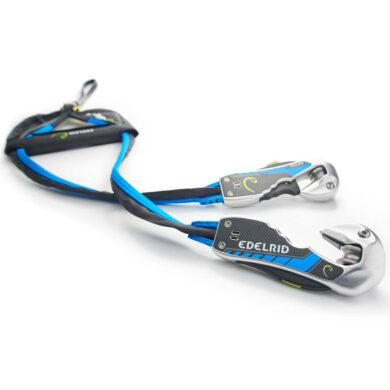
 Edelrid Smart Belay X | Intelligent Smart Belay SystemPrice range: € 544,00 through € 623,00 Ex VAT
 -
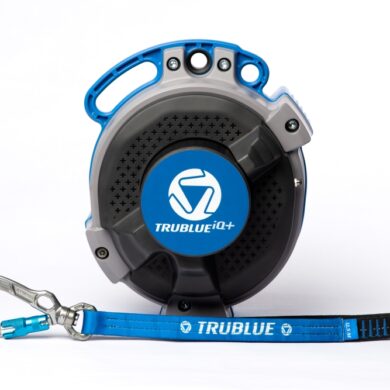
Product on saleTRUBLUE iQ Auto Belay | Intelligent Magnetic Descent SystemPrice range: € 2.845,00 through € 3.465,00 Ex VAT
-
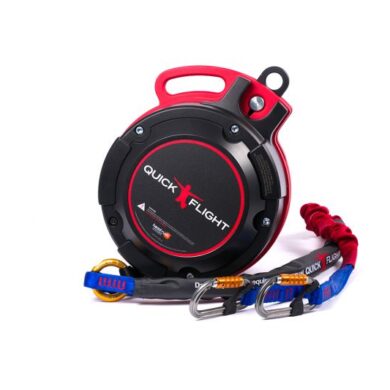
Product on saleQuickFlight Free Fall Device | High-Throughput ThrillPrice range: € 4.036,00 through € 4.321,00 Ex VAT