
Every auto belay on your climbing wall has to come out of service at least once a year. That is not optional: it is a manufacturer requirement and a condition of operating safely. What is optional is how you handle the window when the device is off the wall, and that decision shapes your revenue more than most operators expect.
The annual service schedule
An auto belay is a life-safety device, and its service schedule does not bend around your booking calendar. TRUBLUE auto belays follow a clear interval: the first service falls 15 months after the manufacturing date, then every 12 months after that. Annual service is also a condition of keeping the device warranty valid.
Devices bought together reach their service dates together. Without deliberate scheduling, several lanes fall due in the same window and close at the same time. Map every device’s due date against your busiest weeks before you decide how to service them.
What happens during the service
Each service is a full strip-down inspection. The webbing, the braking mechanism and the internal components are checked, worn parts are replaced, and the device is tested across its rated weight range before it is recertified for another year. Book it as the TRUBLUE iQ Annual Service (€319 ex VAT, also for iQ XL) or the TRUBLUE Speed Annual Service (€349 ex VAT).

Send-in service: where the real cost hides
The traditional model is simple. Your staff take the device down, pack it, ship it to a service centre and wait for it to come back. The service itself is routine; the problem is the gap. Across the full turnaround of packing, freight out, the inspection queue and freight back, that climbing station earns nothing.
- Lost revenue: a closed lane is a non-earning asset, and closures in peak weeks lead to complaints.
- Uncertain timing: shipping delays and service backlogs can stretch the downtime.
- Extra costs: staff time, packaging, return shipping and often a replacement webbing on top of the service fee.
- Lump-sum payments: servicing several devices at once puts a peak in your cash flow.
The swap model: the Zero Downtime Service Program
A swap-based programme removes the gap. With the Zero Downtime Auto Belay Service Program, a freshly serviced and recertified unit with a new, pre-installed webbing arrives about ten days before your device is due. You swap it with the unit on your wall, put your old unit in the same box with the prepaid return label, and schedule the pickup. The station never closes.
- Monthly fee: €49,95 ex VAT for TRUBLUE, TRUBLUE iQ and iQ+; €54,95 for the XL versions and TRUBLUE Speed. The fee stays fixed for two years after you enrol.
- Included: the annual service and recertification, a new webbing every year, shipping both ways, all necessary parts and repairs, and a lifetime warranty for as long as you stay enrolled.
- Ownership: this is not a rental. You always own a device; you just will not have the same serial number every year.
- No lock-in: if you stop, you keep the last unit you received and return to standard annual service.
-
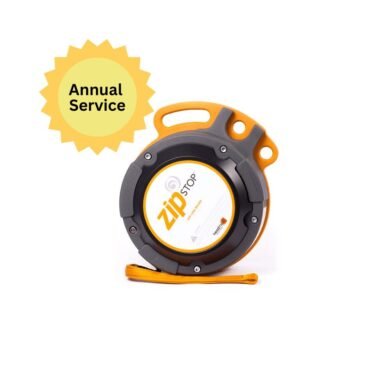 zipSTOP Zip Line Brake – Annual Service€ 509,00 Ex VAT
-
 Trublue iQ Auto Belay – Annual Service€ 319,00 Ex VAT
-
 QuickFlight Free Fall Device – Annual Service€ 379,00 Ex VAT
Send-in or swap: the comparison
| Send-in service | Zero Downtime swap | |
|---|---|---|
| Climbing station | Closed for the full turnaround | Stays open |
| Cost | Per service (TRUBLUE iQ €319, Speed €349 ex VAT) plus shipping and any webbing | Fixed monthly fee (€49,95 or €54,95 ex VAT) |
| Webbing | Bought and fitted separately | New webbing included every year |
| Shipping | You pay for transport to the service centre | Both ways included |
| Repairs found during service | Charged on top | Parts and repairs included |
| Warranty | Standard warranty, void if a service is missed | Lifetime warranty while enrolled |
| Your work | De-install, pack, ship, wait, re-install | Swap the unit in minutes |
Putting numbers to it
The case for a swap programme is arithmetic. Take three figures you already know: the number of auto belays you operate, the revenue each station earns on an average day, and the number of days a device is off the wall under send-in service. Multiply them.
As an illustration only: six auto belays, each station earning about €200 on an average day, with a ten-day send-in turnaround, gives 6 × €200 × 10, or around €12.000 of operating capacity lost across one annual service cycle. On the cost side, a year of the swap programme for a TRUBLUE iQ is €599,40 ex VAT, against €319 for the service alone plus shipping and, in many years, a new webbing. Substitute your own figures; most multi-wall operators find the lost revenue is larger than the cost difference.
When a swap makes sense, and when send-in is fine
A swap programme is not automatically the right answer. If you run a single device that you can service in a quiet period, sending it in is perfectly reasonable: the station was not earning much in that window anyway.
The swap model earns its place when downtime carries a real price: several devices, high participant traffic or a peak season you cannot interrupt. Auto belays already change the staffing and throughput economics of a climbing wall, as covered in why auto belays boost your business; how you service them decides whether that advantage holds through your busiest weeks.
The All-Inclusive Service Subscription for TRUBLUE Auto Belays
Get Started Today
Budgeting a climbing wall? The auto belay price guide lists current TRUBLUE prices, accessories and service costs.
Frequently asked questions
How often does an auto belay need to be serviced?
TRUBLUE auto belays need their first service 15 months after the manufacturing date, then every 12 months. Annual service is a condition of safe operation and of keeping the warranty valid.
How much does an annual auto belay service cost?
The TRUBLUE iQ Annual Service is €319 ex VAT and the TRUBLUE Speed Annual Service is €349 ex VAT, plus shipping and any parts or webbing needed. The Zero Downtime programme costs €49,95 or €54,95 ex VAT per device per month, all-inclusive.
Can climbers keep using the wall while an auto belay is serviced?
Only if a replacement device is on the wall. Under send-in service the station is closed for the full turnaround. A swap programme keeps it open by sending a recertified device first.
Is a recertified swap device as safe as my own?
Yes. A swap device is inspected, tested across its rated weight range and recertified to the same manufacturer standard as your own device.
Do I still own my auto belay in the swap programme?
Yes. The programme works on exchange, so you may not get the same physical unit back, but you always own a device. It is not a rental or lease.
What if my device is already overdue for service?
You can still enrol. We plan with you how to get the device compliant and into the exchange schedule as quickly as possible. Do not use an overdue device in the meantime.
How many auto belays make a swap programme worthwhile?
There is no fixed number. Run the downtime calculation for your site. Multi-wall operations with high-traffic seasons tend to cross the line; single-device sites with off-season flexibility often do not.
What to Consider Before You Spec an Auto Belay System
The systems and accessories discussed above are used on professional climbing walls worldwide. Explore each to find the right fit for your wall configuration and operational setup.
Auto Belay Buying Guide: What to Look For Before You Spec a Climbing Wall
Wall height, expected cycle counts, and your inspection regime all influence which auto belay system belongs on your wall. Browse the full range of certified vertical auto belay systems for commercial climbing operations.
Why the TruBlue IQ Is the Default Choice for High-Traffic Climbing Walls
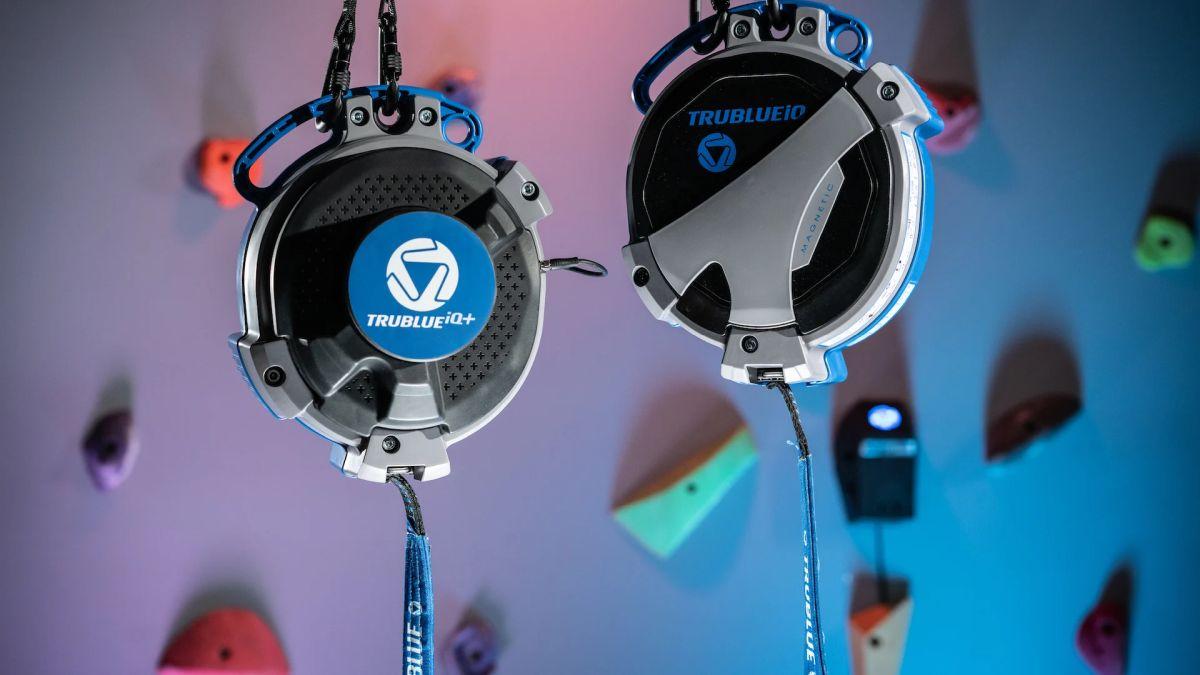
The TruBlue IQ combines magnetic braking with a speed-sensing mechanism that adjusts descent rate to the climber’s weight — delivering a smooth, controlled lowering experience for every rider regardless of size.
Speed Climbing and Auto Belay: What Changes When Every Second Counts
Speed climbing demands a faster retraction rate than recreational walls require. The TruBlue Speed is engineered specifically for competition and training walls where rapid reset between attempts is part of the format.
When to Replace Your Auto Belay Webbing — and What Happens If You Wait Too Long
Webbing is the most wear-exposed component in any auto belay system. Browse certified TruBlue replacement webbing and understand the inspection intervals that keep your units in service and your liability in check.
The Connector Your Climbers Use Every Single Session: Why It Deserves More Attention
The Tru-Clip is the interface between your climber and the auto belay system — designed for one-handed connection, misuse resistance, and the thousands of attach-detach cycles a busy wall puts it through every month.
The Sensor That Catches What Staff Can’t Always See
The Tru-Alert height sensor monitors climber position and triggers an alert when someone reaches the top unclipped. It is the operational safety net for busy walls where staff cannot maintain a direct sightline to every route at all times.
Browse all Vertical Auto Belay Systems →
-
Product on sale
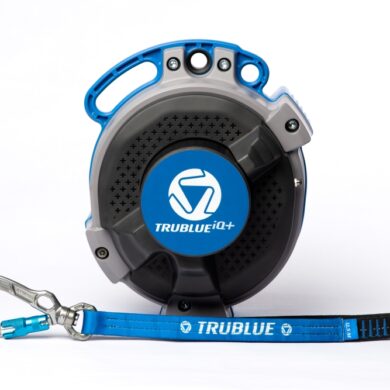 TRUBLUE iQ+ Auto Belay | Catch-and-Hold Projecting TechnologyPrice range: € 4.465,00 through € 5.157,00 Ex VAT
-
Product on sale
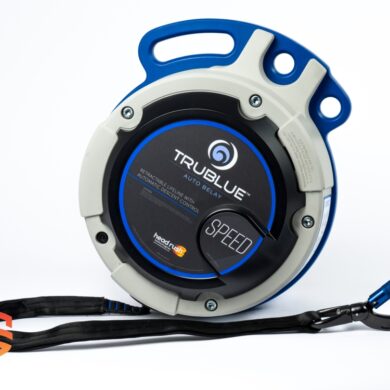 TRUBLUE Speed Auto Belay | Competition-Grade Speed Climbing SystemPrice range: € 2.845,00 through € 3.360,00 Ex VAT
-
Product on saleTRUBLUE iQ Auto Belay – Magnetic Auto Belay System for Climbing WallsPrice range: € 2.845,00 through € 3.465,00 Ex VAT