At a glance, a controlled descent device and a self-retracting lifeline can look like the same piece of equipment: both hang overhead, both pay out and take up line. They are built for opposite jobs. One is designed to arrest a fall; the other is designed to lower a person under control. For anyone planning work at height, that difference is not academic — it shapes the rescue plan, the user’s experience, and whether the system you have specified actually matches the hazard in front of you.
Controlled descent device vs SRL: two different jobs
A self-retracting lifeline (SRL) is a fall arrester. It lets a worker move while paying out line, then locks rapidly when it senses the sudden acceleration of a fall, arresting it in the shortest practical distance. In Europe, SRLs are certified to EN 360, the standard for retractable type fall arresters.
A controlled descent device (CDD) does something different. Rather than locking to stop a fall, it manages a smooth, governed descent, lowering the user at a controlled rate to a landing point. Descender devices of this kind fall under EN 341.
Both can form part of the same personal fall protection system — the system-level standard is EN 363 — but they occupy different roles within it. An SRL answers the question “how do we stop a fall?” A controlled descent device answers a different one: “how does the person get down safely?”
Why the two get confused
The confusion is understandable. Both devices mount overhead, both retract line automatically, and both are assessed as part of a working-at-height system. But shared appearance is not shared purpose. Specifying one where the application calls for the other can leave a gap in the safety plan — most often around what happens after the device engages.
What changes the moment the device engages
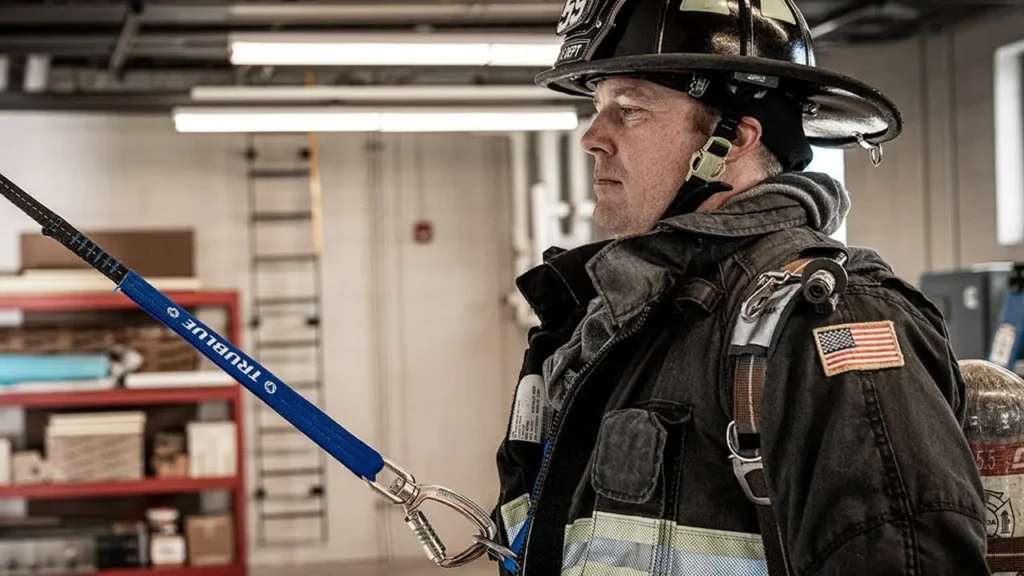
When an SRL arrests a fall, it locks and holds. The fall is stopped, which is exactly its job — but the worker is now suspended at the point of arrest. From that moment a rescue plan has to take over, because a person left hanging in a harness is exposed to the risk of suspension trauma. Under working-at-height duties, planning for that rescue is not optional.
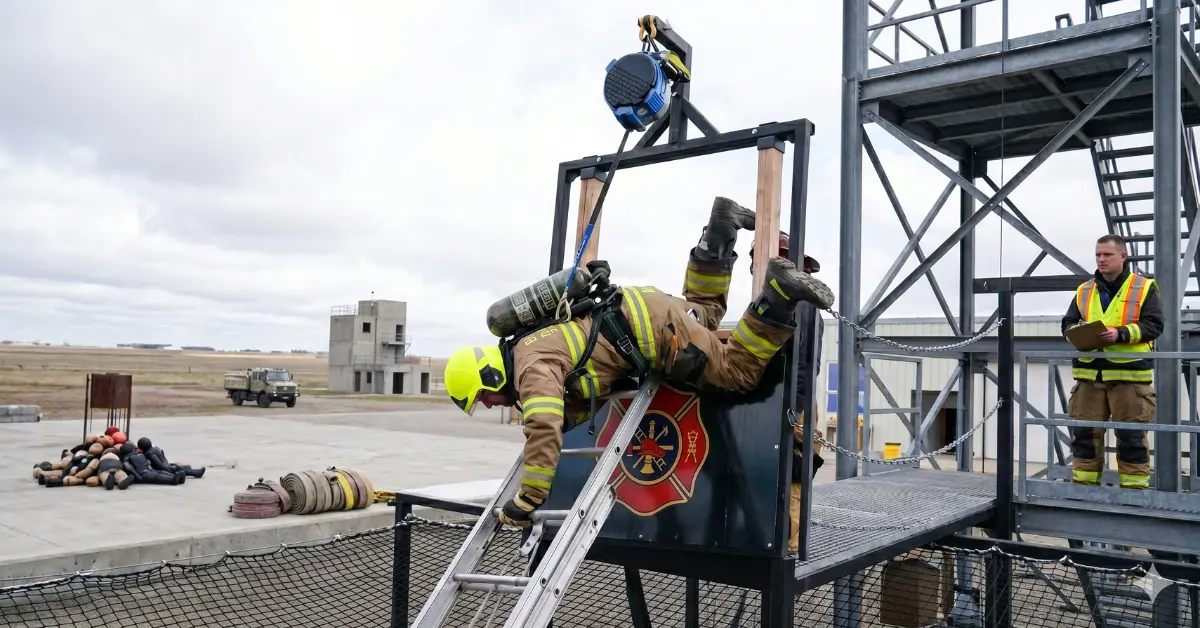
A controlled descent device behaves differently when it takes the load. Instead of an abrupt stop, it lowers the user at a governed rate until they reach the ground or a landing point. The descent itself is the outcome. That can shorten the time a person spends suspended and supports self-rescue or evacuation without waiting for a separate rescue team.
The smoothness of that descent comes down to the braking mechanism. Magnetic-braking controlled descent devices regulate speed with no friction pads to wear, which is part of why they suit repeated, predictable lowering.
At a glance: SRL vs controlled descent device
| Feature | Self-retracting lifeline (EN 360) | Controlled descent device (EN 341) |
|---|---|---|
| Primary function | Arrests a fall by locking under sudden load | Lowers the user in a smooth, controlled way |
| Behaviour when engaged | Abrupt lock and hold | Continuous, governed descent |
| What happens to the user | Held suspended at the point of arrest | Lowered to a landing point |
| After an event | Rescue plan required to bring the user down | User reaches the ground under the device’s control |
| Suspension-trauma exposure | Begins while the user hangs awaiting rescue | Reduced — lowering shortens time suspended |
| Freedom of movement | Can lock during normal movement | Allows movement, then controlled descent |
| Repeated use | A fall event usually means inspection before reuse | Repeatable descents between scheduled service |
| Best-fit role | Fall arrest | Controlled descent, evacuation, rescue, training |
Where a controlled descent device fits
A controlled descent device earns its place wherever the requirement is not just to stop a fall, but to bring a person — or a load — down under control. Common applications include:
- Emergency egress, where a worker needs a defined, independent way down when normal access is blocked
- Evacuation and rescue, where a casualty must be lowered rather than left suspended
- Dropped-object and load control, where a suspended item needs to descend predictably if a primary system fails
- Training at height, where realistic, repeatable descents matter more than abrupt lockouts
Training is a particularly strong fit. Fire and rescue, utility lineworker, and maritime programmes all rely on repeated descents during drills, and a device that lowers smoothly and resets quickly supports more realistic, more consistent training than a system designed to lock. Thrill Syndicate’s training and education support covers how descent equipment is specified for these environments.
Where an SRL is still the right choice
None of this makes a controlled descent device a replacement for fall arrest. Where the hazard is a fall and the duty is to arrest it, an SRL — or another EN 360 fall arrester — is the correct device, and a controlled descent device does not substitute for it. The honest position is not that one device is better than the other, but that they answer different questions. Many work-at-height systems need both: fall arrest to stop a fall, and a controlled means of descent for what happens next.
Choosing within your fall protection system
The decision is rarely “CDD or SRL” in the abstract. It is a question of the hazard, the system design, and the rescue plan. Start from the work-at-height assessment: what is the fall hazard, how will a fall be arrested, and how will a suspended worker be brought down? Map each requirement to the device built for it, within the framework of EN 363. Thrill Syndicate’s professional work-at-height range covers both descenders and fall arresters for exactly this reason.
If you are specifying equipment for a work-at-height or training application and are unsure where a controlled descent device fits alongside fall arrest, request a quote and the team will help you match the device to the hazard and the rescue plan.
Frequently asked questions
Is a controlled descent device the same as an SRL?
No. A self-retracting lifeline is a retractable type fall arrester, certified to EN 360, designed to stop a fall by locking. A controlled descent device is a descender, covered by EN 341, designed to lower a person under control.
What is the main difference between a CDD and an SRL?
Their behaviour when the device takes the load. A controlled descent device lowers the user at a governed rate. A self-retracting lifeline locks rapidly to arrest a fall.
Can a controlled descent device replace an SRL?
Not for fall arrest. Where the duty is to arrest a fall, an EN 360 fall arrester is the correct device. A controlled descent device addresses controlled lowering and descent, which is a different requirement within the same system.
Why does an SRL require a rescue plan after a fall?
Because the worker is left suspended at the point of arrest. A person hanging in a harness is exposed to suspension trauma, so working-at-height duties require a plan to bring them down promptly.
Which EN standards apply to these devices?
EN 341 covers descender devices for rescue, EN 360 covers retractable type fall arresters, and EN 363 covers the personal fall protection system as a whole.
What is a “yo-yo” in fall protection?
It is an informal name for a self-retracting lifeline, used in some training and field settings.
The Equipment Professionals Depend On When Working at Height
The gear discussed in this article is used by professionals operating at height, in rescue roles, and in technical environments where certified equipment is a non-negotiable. Explore each category to find what your work demands.
What Separates Professional Safety Gear From Adventure Park Equipment
Work-at-height and rescue gear operates under EN 363 and IRATA standards that differ from EN 15567 — different certification scope, inspection intervals, and load assumptions. Browse the full professional equipment range.
The Fall Arrest Decision: Why the Right Arrester Determines How a Rescue Begins
A fall arrester that locks on a dirty or wet rope under real load behaves differently to one tested in ideal conditions. Browse certified fall arresters rated for the environments your team works in.
Controlled Descent: Matching the Device to the Rescue Scenario
From single-person self-rescue to two-person load scenarios — descent device selection affects not just safety but speed of evacuation. Explore certified descenders for professional and rescue use.
Work Safety Harnesses: Why the Fit and Suspension Tolerance Matter More Than the Label
A harness that passes EN 361 may still cause suspension trauma in an arrest event if the fit is wrong for the wearer. Browse work safety harnesses built for extended wear, restricted access, and fall arrest compliance.
Lanyards for Working at Height: The Case for Adjustable Over Fixed
Fixed lanyards create slack in certain working positions; adjustable lanyards eliminate it. Browse work lanyards designed for the range of postures, anchor heights, and movement patterns your team encounters on site.
Canyoning Equipment: Where Technical Performance Meets Wet, Abrasive Conditions
Canyoning places different demands on harnesses, descenders, and ropes than most vertical environments — prolonged water exposure, abrasive rock, and loaded rope handling under guide supervision. Explore technical canyoning gear.
Browse all Professional Safety Equipment →
-
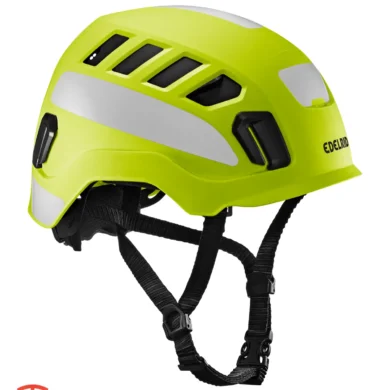 Edelrid Tectum Air Professional Work Safety HelmetPrice range: € 66,00 through € 69,00 Ex VAT
 -
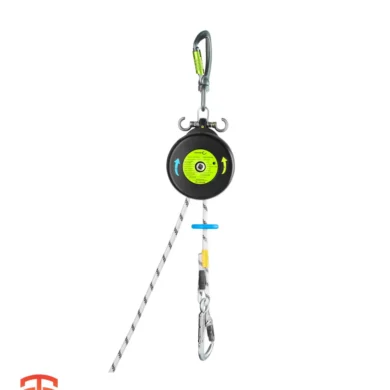 Edelrid Safe Descent Pro | Descent & Rescue devicePrice range: € 1.230,00 through € 1.777,00 Ex VAT
 -
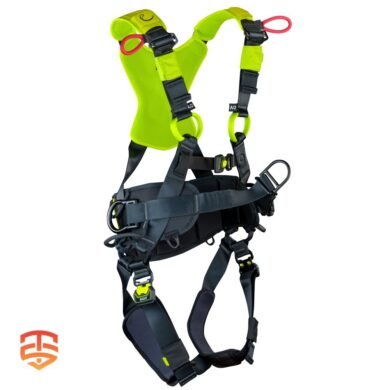 Edelrid FLEX PRO PLUS | Full Body Harness€ 240,00 Ex VAT