Choosing the right continuous belay system is the single most important operational decision you will make for your adventure park. This guide compares the rolling precision of Saferoller against the lightweight versatility of Speedrunner to help you maximize safety and profitability. Read on to discover which system aligns perfectly with your business goals.
Investment vs. return on investment
Which system offers a better entry price?
For operators working with a strict launch budget, the Speedrunner system is often the most economical choice. The hardware relies on a simpler hook-based design (the Kanhook) rather than a complex trolley mechanism. This reduces your initial capital expenditure significantly compared to rolling systems.
However, a lower upfront cost does not always equal better long-term value. You must consider the total cost of ownership over five to ten years. Cheaper initial setups can sometimes lead to higher operational friction if not matched to the right course type.
Saferoller requires a higher initial investment due to its precision-engineered trolley units. These units are built to withstand heavy usage and aggressive environments. While the startup cost is higher, the durability often translates to lower replacement frequency.
How does throughput impact ROI?
Throughput is the primary driver of revenue in high-volume adventure parks. Saferoller is designed specifically to maximize the number of participants on a course per hour. The rolling trolley creates a seamless momentum that prevents bottlenecks at platforms.
Speedrunner is highly efficient but requires manual manipulation at bracket points. This slight pause for the user to slide the hook over the bracket can add up during peak hours. If your park experiences massive crowds, these seconds per platform can reduce overall daily capacity.
Saferoller helps you process 20% to 30% more clients per day compared to standard systems. This increase in ticket sales can offset the premium equipment cost within the first season of operation.
What about staffing costs?
Staffing often represents the largest operational expense for any ropes course. Continuous belay systems generally reduce the need for monitors compared to smart belays. However, Saferoller’s “hands-free” nature allows for the lowest possible staffing levels.
Because the safety line can be installed out of reach, users simply roll without touching the equipment. This means you need fewer staff on the ground to assist or correct user errors. Speedrunner, being a half-height system, may require slightly more supervision to ensure younger guests manage the hook correctly.
Reducing your daily headcount by even one or two guides creates massive savings annually. This operational efficiency is where the premium investment in a rolling system pays dividends.
- Saferoller: Higher upfront cost, maximum throughput, lowest staffing.
- Speedrunner: Lower upfront cost, good throughput, moderate staffing.
- Verdict: Choose Saferoller for high volume; choose Speedrunner for budget sensitivity.
Operational efficiency and ease of use
Is a rolling or sliding system easier to manage?
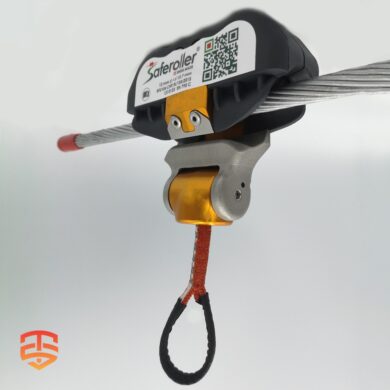
The core difference lies in the physics of movement. Saferoller uses a trolley with ball bearings that rolls effortlessly along the cable. This reduces friction to almost zero, allowing users to glide between obstacles without physical exertion.
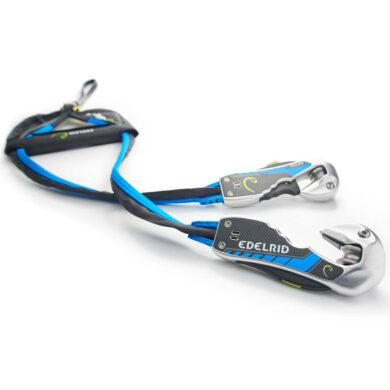
Speedrunner utilizes a sliding hook mechanism (Kanhook) that glides along the cable. While smooth, it does generate more friction than a rolling trolley. This works perfectly for flat or descending courses but requires more effort on ascents.
For the operator, the rolling system means fewer rescue situations caused by exhausted climbers. When clients struggle to drag their safety gear, they get stuck, requiring staff intervention. A rolling system mitigates this operational headache.
How easy is it for children to use?
Younger visitors are the lifeblood of many adventure parks. The Saferoller system is widely regarded as the easiest solution for children as young as four. They simply push the trolley, and it follows them; no complex manipulation is required.
Speedrunner is also very kid-friendly but requires motor skills to navigate the hook over brackets. The safety line must be installed at half-height so the child can reach it. This interaction can be engaging for some but tiring for the very young.
If your target demographic is primarily young families, removing the “technical” aspect of the gear is a huge plus. A friction-free experience keeps kids happy and parents relaxed.
What about maintenance and durability?
Operational efficiency also depends on downtime for repairs. Both systems are designed with rugged components, but they wear differently. The Saferoller trolley has internal bearings that are sealed, protecting them from the elements.
Speedrunner hooks have a removable wear plate made of hardened steel. This is a brilliant feature because you only replace the small wear plate, not the entire device. This makes ongoing maintenance costs predictable and low.
However, the Saferoller system reduces wear on the safety cable itself. Rolling generates less abrasion than sliding. This means your expensive safety lines may last longer with a trolley system.
Safety and customer satisfaction
How does line height affect safety?
One of the unique advantages of the Saferoller system is the ability to install the safety line completely out of reach. At 2.1 to 2.3 meters high, the user cannot tamper with the equipment even if they wanted to. This eliminates the risk of fingers getting pinched or curious guests playing with brackets.
Speedrunner requires the safety line to be at half-height (around 1.5 meters). This is necessary because the user must guide the hook. While safe, it brings the steel cable and brackets into the user’s “impact zone” during a fall.
An out-of-reach line provides a cleaner, more immersive experience. The guest focuses entirely on the obstacle, not on managing their safety tether.
Which system provides a better zip line experience?
Zip lines are often the highlight of any course. Saferoller trolleys are designed to transition seamlessly from climbing elements to zip lines. The 360-degree swivel allows the client to spin without twisting the lanyard.
Speedrunner can handle short zip lines perfectly well. However, for long, high-speed zips (over 50 meters), you typically need to add a separate trolley accessory. This adds a step to the process where the user or staff must attach a trolley.
Saferoller is an all-in-one solution where the climbing device is also the zip trolley. This “fluidity” dramatically increases customer satisfaction scores by keeping the adrenaline pumping without interruption.
How do evacuation procedures compare?
In the rare event of an evacuation, speed is critical. Both systems allow for quick operator removal using special tools. You never want a system where a tool is required for the user to disconnect, but staff must be able to do it instantly.
Saferoller allows for a very fast evacuation because the trolley can be unlocked from the line by a rescuer from above or below. Speedrunner also allows for efficient removal, but the hook geometry can sometimes be trickier to manipulate under tension.
Both systems are ISO certified and meet the highest international safety standards. The choice often comes down to whether you prefer a passive safety model (out of reach) or an active one (half-height).
Technical specifications comparison
What are the main specs side-by-side?
Below is a direct comparison of the critical technical specifications for both systems. This table will help you visualize the physical and operational differences.
| Feature | Saferoller (Rolling) | Speedrunner (Sliding) |
| Primary Mechanism | Trolley with Ball Bearings | Kanhook (Sliding Hook) |
| Safety Line Height | Out-of-Reach (1.7m – 2.3m) | Half-Height (1.4m – 1.6m) |
| User Interaction | Hands-Free (Passive) | Manual Guiding (Active) |
| Throughput | Maximum (High Capacity) | High (Standard Capacity) |
| Zip Line Capability | Integrated (Up to 200m+) | Integrated (<50m) / Add-on (>50m) |
| Minimum Age | 4 Years | 4 Years |
| Maintenance focus | Trolley Unit & Bearings | Replaceable Wear Plate on Hook |
| Entry Cost | Premium | Economical |
| Staffing Needs | Minimal | Low to Moderate |
Which continuous belay system maximizes your adventure park profits?
Ultimately, the choice between Saferoller and Speedrunner depends on your specific business model and budget. If you prioritize maximum throughput and hands-free safety, Saferoller is the superior investment for high-traffic parks. However, if you need a cost-effective, reliable solution that offers a classic climbing feel, Speedrunner delivers exceptional value.
Need expert advice from the adventure specialists?
Get in touch Today
Frequent asked questions
Which system is safer for children?
Both systems are extremely safe and prevent accidental disconnection. However, Saferoller is often considered safer for very young children because the safety line is out of reach. This prevents them from touching the mechanism or getting their fingers caught in brackets.
Can I retrofit my existing park with these systems?
Yes, both systems are designed to be easily retrofitted onto existing courses. You can often reuse your existing safety cables if they are in good condition. However, you may need to replace the brackets to match the specific geometry of the Saferoller or Speedrunner devices.
Do I need special trolleys for zip lines?
With Saferoller, the climbing device acts as the trolley, so no extra gear is needed for standard zip lines. With Speedrunner, you can zip on the hook for short distances, but for long, fast lines, you will need to attach an additional pulley or trolley accessory.
How often do I need to replace the equipment?
The lifespan depends heavily on usage volume and environment. Speedrunner hooks have replaceable wear plates, which extends the life of the main unit significantly. Saferoller trolleys are durable, but the internal bearings may need servicing or replacement after heavy seasons of use.
Is the installation process different?
Speedrunner is generally faster and cheaper to install because the bracket alignment is slightly more forgiving. Saferoller requires precise installation to ensure the continuous rolling momentum is maintained throughout the course. Poor installation can negate the benefits of the rolling system.
Ascend to New Heights: Expert Insights on Ropes Course Technology
Ropes courses offer exhilarating challenges and unforgettable experiences. This article explores the core technology behind them. But to truly scale the heights of knowledge, check out our additional resources featuring expert opinions on the latest advancements and best practices in ropes course design and operation.
- Aerial Safety: Exploring High Ropes Course Belay Systems
- Safe Ropes Course Adventures
- Harnessing Innovation: Next-Generation PPE for Adventure Parks
- Why Keyed Smart Belay Systems Reduce Costs
- Exploring High Ropes Course Belay Systems
- Advanced Rescue Devices in Aerial Adventure Courses
- Top Picks for Best Ropes Course Equipment Season 2023
- Smart Belay for Authentic Climbing Experience
- Edelrid Novelties: Highlights High work and tree care
- Using LockD Clips with Vertical Auto Belays
- Considerations when designing ropes courses and adventure parks?
- Choosing the right Belay System
- Continuous Belay for Ropes Courses
- Ropes Course Rescue Innovations
-
Product on sale
 LockD Clips Swivel | Continuous Self-BelayOriginal price was: € 389,00.€ 319,00Current price is: € 319,00. Ex VAT
 -
Saferoller Trolley V3 (PPE)Price range: € 240,00 through € 252,00 Ex VAT
-
Edelrid Smart Belay X | Intelligent Smart Belay SystemPrice range: € 544,00 through € 623,00 Ex VAT