
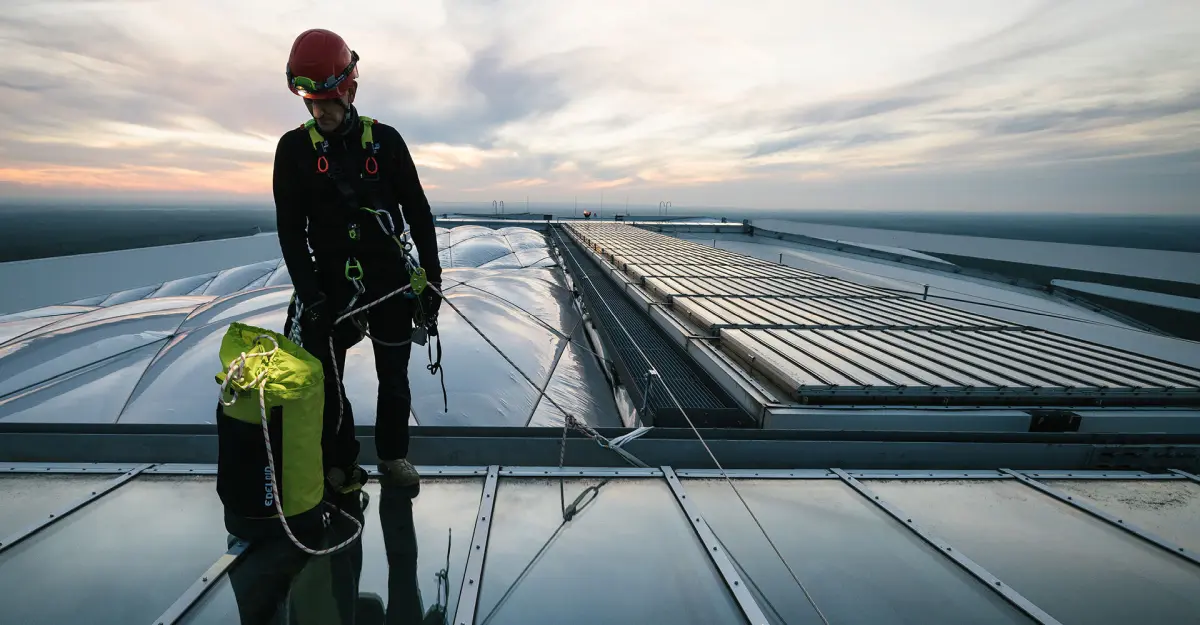
Finding reliable scaffolding fall protection equipment is absolutely necessary for crews operating in high-risk vertical environments. This specific gear stops fatal falls while ensuring operators remain comfortable and productive throughout demanding physical shifts. A complete safety setup transforms standard hazard management from a basic compliance checkbox into a true operational advantage.
Understanding the core components of scaffolding fall protection equipment
A reliable safety setup requires multiple working parts designed for extreme conditions to ensure complete worker safety.
What is the best scaffolding fall protection equipment?
The ideal setup features a rugged harness, an energy-absorbing lanyard, and highly secure anchorage connectors. Implementing professional fall protection equipment guarantees workers stay safe without sacrificing their daily project output. Top-tier gear always combines strict regulatory compliance with exceptional user comfort.
Identifying hidden site fall hazard mitigation factors
Operators must prioritize a complete system over disconnected pieces to ensure seamless hardware compatibility across the entire site. Evaluating unique structural risks helps supervisors select the exact scaffolding fall protection equipment needed for safe daily access. This unified approach directly reduces the risk of catastrophic equipment failure during an incident.
Selecting a reliable personal fall arrest system for scaffolding
The backbone of any elevated work plan is a highly robust and instantly responsive arrest mechanism.
Choosing a personal fall arrest system for scaffolding
Match your hardware directly to the specific load requirements and daily environmental exposures of your job site.
- Evaluating your scaffolding fall protection equipment against operational wear prevents premature gear degradation.
- This careful selection process guarantees structural compatibility with existing site anchor points.
When is a full body harness for scaffolding required?
A harness becomes mandatory whenever workers operate outside the protection of standard guardrails or temporary edge barricades. This essential full body harness for scaffolding distributes arresting forces evenly across the thighs, pelvis, and strong shoulder muscles. Proper force distribution prevents severe localized trauma and significantly extends the safe window for emergency retrieval.
-
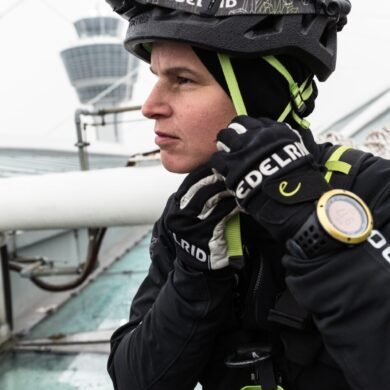 Edelrid SALATHE | Softshell helmet€ 77,00 Ex VAT
 -
 Edelrid OMBILIX ADJUST | Adjustable LanyardPrice range: € 85,00 through € 88,00 Ex VAT
 -
 Edelrid FLEX PRO | Full Body Harness€ 255,00 Ex VAT
Improving mobility with an adjustable lanyard for working at height
Workers need total freedom to move across platforms without ever compromising their primary tie-off security.
How does an adjustable lanyard for working at height improve safety?
Operators can rapidly fine-tune their positioning to remain completely hands-free while performing intricate structural tasks.
- This functional flexibility ensures your scaffolding fall protection equipment supports productivity rather than hindering it.
- Actively shortening the connection line minimizes excessive slack and prevents dangerous swing falls.
Customizing connection lines for complex access structures
Limiting hazard exposure requires crews to constantly adapt their tie-off distance as they navigate uneven platform levels. Using an adjustable lanyard for working at height makes your overall scaffolding fall protection equipment strategy exponentially more effective. Keeping the line tight actively prevents workers from ever reaching a dangerous leading edge.
Vertical safety using a guided fall arrester for scaffolding
Ascending and descending vertical access paths present unique risks that demand specialized automatic locking devices.
What are the components of a guided fall arrester for scaffolding?
This reliable vertical system utilizes a flexible anchor line, a mobile trailing mechanism, and a short shock-absorbing link.
- These robust components make your scaffolding fall protection equipment highly responsive to abrupt vertical drops.
- The cam mechanism locks instantly under downward pressure to prevent prolonged free plummets.
Securing continuous movement on tall access masts
Ascending vertical lifelines requires specialized hardware to automatically lock onto the rope during a sudden slip or loss of footing. Integrating a guided fall arrester for scaffolding into your scaffolding fall protection equipment provides continuous, unbroken protection during very long climbs. The arrester trails smoothly during normal movement but engages instantly to guarantee immediate worker suspension.
Managing hazard zones with proper roof-access safety gear
Moving seamlessly from temporary platforms to permanent rooftops introduces dangerous leading-edge friction exposures.
Protecting crews during high-elevation transition phases
Transitioning safely requires specific roof-access safety gear capable of withstanding sharp edge friction and sudden tension. Selecting edge-tested scaffolding fall protection equipment ensures the lifeline remains fully intact even if a worker slips over a harsh masonry corner. This specialized robust gear actively prevents catastrophic line severance during a high-tension edge event.
Fall hazard mitigation on variable-height platforms
Crews frequently rotating between different project elevations need highly adaptable energy-absorbing devices to stay continuously secure. Deploying a shock-absorbing lanyard as part of your scaffolding fall protection equipment ensures impact forces stay below dangerous physical thresholds. Proper force mitigation keeps your workers confident and focused entirely on their immediate construction tasks.
-
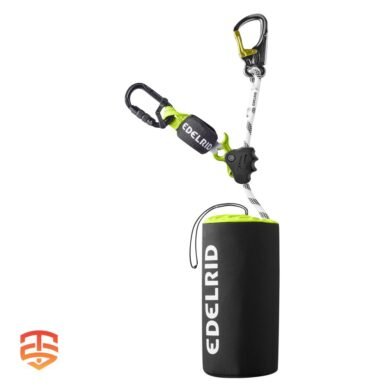 Edelrid OMBILIX 140 | Guided fall arresterPrice range: € 123,00 through € 157,00 Ex VAT
 -
 Edelrid Shockstop-I 140 Giant€ 108,00 Ex VAT
 -
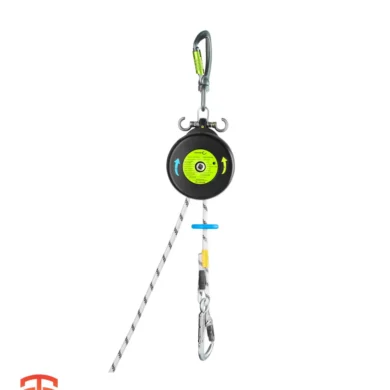 Edelrid Safe Descent Pro | Descent & Rescue devicePrice range: € 1.230,00 through € 1.777,00 Ex VAT
Maintaining your scaffolding fall protection equipment
Consistent preventive maintenance is the absolute only way to guarantee hardware reliability over long operational timelines.
How do you inspect a personal fall arrest system for scaffolding?
Workers must visually check every single synthetic strap, metal buckle, and stitching point before starting their shift.
- Thoroughly inspecting your scaffolding fall protection equipment reveals chemical burns or deformed hardware immediately.
- Supervisors must actively check for deployed fall indicators on all active shock absorbers.
Storing synthetic webbings to prevent environmental degradation
Routine care and smart storage protocols significantly extend the lifespan of your critical safety hardware while ensuring strict regulatory compliance. Storing your scaffolding fall protection equipment in dry, clean environments prevents the invisible degradation of vital synthetic webbings. Active daily maintenance directly translates to fewer unexpected equipment failures and drastically lower long-term replacement costs.
Boosting operational efficiency through safety gear
Premium safety gear naturally accelerates daily project timelines by reducing physical strain on your crew.
Upgrading older gear to accelerate project timelines
Equipping your team with modern hardware reduces tedious adjustment delays and speeds up the daily donning process. Investing in premium scaffolding fall protection equipment transforms basic compliance protocols into a highly measurable daily operational advantage. Faster deployment directly eliminates tool-related delays and ensures far more predictable job completion times.
Ergonomic advantages for professional crews
Advanced modern harnesses feature highly breathable padding and lightweight aluminum hardware to completely reduce chronic shoulder strain.
- Upgrading your scaffolding fall protection equipment helps retain skilled labor by prioritizing their physical comfort.
- Better load distribution and heat dissipation keeps workers focused during demanding summer shifts.
Implementing proper scaffolding fall protection equipment is the single most effective way to safeguard your crews and streamline site operations. Reliable gear stops severe accidents, reduces daily worker fatigue, and ensures strict regulatory compliance across all your active projects. Investing in these professional safety systems ultimately secures your bottom line and protects your most valuable workforce assets.
Need expert advice from the adventure specialists?
Get in touch Today
Frequent asked questions
What is the best scaffolding fall protection equipment?
The best scaffolding fall protection equipment combines an ergonomic full body harness with a reliable shock-absorbing lanyard. Professional-grade gear must prioritize high weight capacities, durable webbing, and intuitive adjustment points. Selecting reputable safety brands ensures the equipment withstands harsh daily site conditions without failing.
How do you inspect a personal fall arrest system for scaffolding?
Operators must visually examine the webbing, D-rings, and metal buckles for any signs of fraying, rust, or distortion before use. It is necessary to check the impact indicators on shock absorbers to ensure they have not been previously deployed in a fall. Regular documented inspections keep your gear compliant and fully operational.
When is a full body harness for scaffolding required?
A harness is strictly required whenever a worker operates at height without the protection of complete guardrails or safety nets. Wearing this specific scaffolding fall protection equipment is mandatory during the initial assembly and dismantling phases of any project. Proper harness usage is the ultimate safety net for preventing fatal edge falls.
What are the components of a guided fall arrester for scaffolding?
This system typically includes a heavy-duty vertical lifeline, a mobile rope grab, and a secure carabiner attachment point. The mechanism relies on an automatic locking cam that engages instantly when sudden downward acceleration occurs. These components allow workers to climb smoothly while guaranteeing immediate fall arrest.
How does an adjustable lanyard for working at height improve safety?
This device allows workers to actively restrict their line length, preventing them from ever reaching a dangerous leading edge. Shortening the connection point significantly reduces potential swing falls and lowers the overall bodily impact force. This structural adaptability keeps crews secure while providing the necessary mobility to complete complex tasks.