Choosing a belay system decides how many participants a ropes course handles per hour, how many staff it needs and how much the installation costs. This guide compares four systems sold by Thrill Syndicate: Saferoller Trolley V3, Speedrunner Kanhook Ultimate, LockD Clips Swivel and Edelrid Smart Belay X. It covers how each works, where it fits and current list prices.
All prices are Thrill Syndicate list prices excluding VAT, November 2026. For a broader comparison of the two approaches, read smart belay vs continuous belay.
Continuous belay or smart belay: what is the difference?
A continuous belay system keeps the participant’s connector on one lifeline from the start platform to the end. The participant cannot unclip on the course, so staff are only needed where participants clip in and out. The lifeline needs brackets or clamps at every element and transition.
A smart belay system uses two carabiners that work as a pair: one cannot open unless the other is closed. Participants clip from cable to cable, as on a traditional course, but cannot be fully unclipped. Because it works on existing cables, smart belay is usually the simpler upgrade for a running course.
The four systems at a glance
| System | Type | Best fit | Price from (ex VAT) |
|---|---|---|---|
| Saferoller Trolley V3 | Continuous belay, rolling trolley | New courses; courses with ziplines or free fall | €245 per trolley |
| Speedrunner Kanhook Ultimate | Continuous belay, sliding hook | New courses with a lower hardware budget | €121 per piece, sold in packs of 10 |
| LockD Clips Swivel | Smart belay, mechanical | Retrofits of existing courses | €389 per unit |
| Edelrid Smart Belay X | Smart belay, magnetic locking | High-traffic parks and retrofits | €544 per set |
How do the systems compare in practice?
Saferoller: one trolley from start to finish
The Saferoller Trolley V3 rolls along the lifeline and has a 360° swivel. Participants stay connected on platforms, bridges and ziplines. The system can be extended with the Saferoller Switch Bifurcation (€434) for route choices, the Saferoller ZipEye for ziplines and the Saferoller Transfer (from €2.052) for free fall jumps. Lifeline brackets cost €208–€221 and a monoclamp €206 per mounting point.
Speedrunner: a continuous lifeline with a sliding hook
The Speedrunner Kanhook Ultimate slides along the Speedrunner lifeline and has a safety latch that closes automatically. Mounting hardware is light: the Easy Bracket V6 costs €47 and the zipline bracket €93. For a side-by-side look at the two continuous systems, read Saferoller vs Speedrunner.
LockD Clips: mechanical smart belay for existing courses
LockD Clips Swivel keeps one carabiner locked at all times. Staff open the clips at the start and end of the course with a Tweezle tool (Tweezle O, €76). For via ferrata, LockD Clips Rocks (€488) adds a built-in shock absorber. A starter service kit costs €276.
Edelrid Smart Belay X: magnetic smart belay for high traffic
The Edelrid Smart Belay X uses magnetic locking technology so the two carabiners communicate without a cable between them. It starts at €544 with a pilot bar and goes up to €623 with a CUPID swivel and tie-in loop. The Smart Belay annual service costs €39 per unit.
How to choose
- Building a new course, or adding ziplines and a free fall: start with Saferoller.
- Building a new course on a tighter hardware budget: compare Speedrunner.
- Upgrading a running course without replacing cables: compare LockD Clips and Edelrid Smart Belay X.
- Running a high-traffic park with many young participants: look at Edelrid Smart Belay X first.
Frequently asked questions
What is the difference between continuous belay and smart belay?
With continuous belay, the participant’s connector stays on one lifeline from start to finish and cannot be removed on the course. With smart belay, the participant uses two interlocking carabiners that cannot both be open at the same time, on the course’s existing cables.
Which belay system is best for an existing ropes course?
Smart belay systems such as LockD Clips and Edelrid Smart Belay X work on existing cables, so they are usually the simpler retrofit. Continuous belay systems such as Saferoller and Speedrunner need a lifeline with brackets at every element, which suits new builds and major renovations.
How much does a ropes course belay system cost per participant?
Per participant set, list prices start at €245 for a Saferoller Trolley V3, €389 for LockD Clips Swivel and €544 for an Edelrid Smart Belay X. The Speedrunner Kanhook Ultimate costs €121 per piece and is sold in packs of 10. Continuous belay courses also need lifeline hardware at every element.
Do belay systems need annual service?
Yes. Budget for inspection and service as part of the cost of ownership. The Edelrid Smart Belay annual service is €39 per unit, and LockD offers a starter service kit at €276.
Can participants go from a ropes course onto a zipline or free fall?
With Saferoller, yes. The Saferoller ZipEye lets participants ride a zipline on the same trolley, and the Saferoller Transfer integrates a free fall jump into the course.
Get a quote for your course
Send the number of elements, the expected participants per day and whether the course already exists through the request a quote form. You get a recommended system and one quote for connectors, lifeline hardware and service. Browse all options in the ropes course belay systems category.
The Systems and Equipment That Make Commercial Ropes Courses Work
The systems and gear discussed above are used daily on professional ropes courses worldwide. Explore each category to find what fits your course design and operational requirements.
Choosing the Right Belay System: What Every Ropes Course Operator Should Understand
Your belay system is the backbone of your course — it determines throughput, staff requirements, and the guest experience from start to finish. Browse the full range of certified commercial belay solutions.
How Smart Belay Technology Eliminates the Most Common Ropes Course Safety Gap
Edelrid Smart Belay systems use a magnetic gate mechanism that keeps participants clipped in at every transfer point — removing the window of unclipped exposure that traditional systems leave open.
Continuous Belay Explained: Why High-Volume Courses Are Making the Switch
A continuous belay system keeps guests permanently connected as they move through the course — eliminating clip transfers entirely and dramatically reducing the need for staff supervision at each element.
When Things Go Wrong at Height: Descent and Rescue Equipment for Ropes Course Operators
Every professional course needs a credible rescue plan. Explore descent and rescue devices designed for the controlled, efficient extraction of a stuck or incapacitated participant at any point on the course.
Fit, Comfort and Throughput: Why Harness Choice Affects More Than Just Safety
A harness that fits poorly slows your harnessing station, generates complaints, and creates adjustment problems on course. Browse commercial ropes course harnesses built for speed, fit range, and all-day guest comfort.
The Helmet Conversation: What Operators Get Wrong When Specifying Head Protection
Not all helmets meet the lateral impact standards required for ropes course use. Explore certified ropes course helmets that cover the right certification standards, fit a wide head size range, and hold up to commercial rental cycles.
Browse all Ropes Course Equipment →
-
 LockD Clips Swivel | Continuous Self-Belay€ 389,00 Ex VAT
-
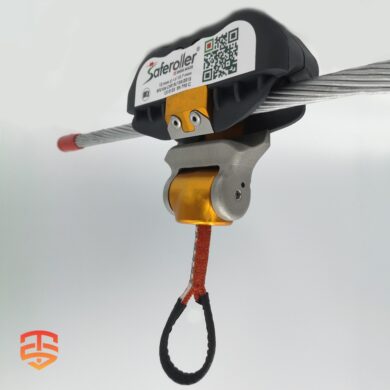 Saferoller Trolley V3 (PPE)Price range: € 245,00 through € 260,00 Ex VAT
-
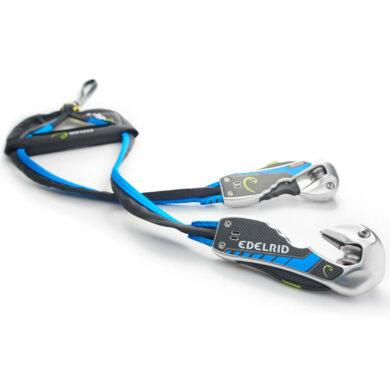 Edelrid Smart Belay X | Intelligent Smart Belay SystemPrice range: € 544,00 through € 623,00 Ex VAT
Need expert advice from the adventure specialists?