Selecting the right equipment is vital for the safety and profitability of any adventure park or commercial zipline operation. This professional comparison examines the technical differences between the Zippey, Zipspeed-S, and Zipspeed-L models. You will discover which hardware best suits your specific course length, speed requirements, and maintenance budget.
Comparing ISC zipline trolley features
Operators must understand the core functional differences between these three primary models to ensure guest safety and equipment longevity. Each trolley serves a unique purpose within the recreation industry, ranging from lightweight park use to extreme high-speed lines. Choosing the correct model reduces operational downtime and lowers long-term replacement costs.
Which ISC trolley is best for adventure parks?
The Zippey Clip’n’Zip is the premier choice for traditional adventure parks requiring frequent and easy attachment. Its one-handed gate mechanism allows guides or participants to secure the trolley quickly and safely. This model is optimized for agility and ease of use on standard park lines.
- One-handed operation for faster guest throughput.
- Bi-directional design to prevent installation errors.
- Stainless steel wheels for high durability on steel cables.
What are the weight and strength differences?
While the Zippey is incredibly light at 450g, the Zipspeed models provide significantly higher breaking strengths for demanding commercial environments. The Zipspeed-S and L models both feature a minimum breaking strength of 40kN, nearly doubling the capacity of the lighter Zippey. This makes the Zipspeed series the standard for heavy-duty applications.
- Zippey MBS rated at 25kN for standard safety.
- Zipspeed MBS rated at 40kN for maximum security.
- Aerospace-grade aluminum construction to prevent plate flexing.
These technical specifications ensure that your hardware can withstand the dynamic forces of high-velocity braking and heavy rider loads.
Performance and speed capabilities
Speed ratings and bearing life are the most critical factors when managing high-volume zipline attractions. The larger the trolley, the higher the maximum speed it can safely sustain without overheating or damaging the internal components. Matching the trolley to your line’s velocity is essential for preventing premature bearing failure.
How fast can the Zipspeed-L trolley go?
The Zipspeed-L is the powerhouse of the group, designed for high-velocity performance on long-distance lines. It utilizes large 75mm stainless steel wheels and specialized deep-groove bearings to handle extreme heat and friction. This model is the industry standard for fast, long zipline attractions.
- Optimal high-speed performance with low friction.
- Sealed bearings to protect against dust, salt, and moisture.
- Large wheel diameter to reduce rolling resistance on long spans.
Is the Zipspeed-S better for medium lines?
For courses that don’t reach extreme velocities, the Zipspeed-S offers a perfect balance of performance and cost-efficiency. It handles medium speeds comfortably using its 50mm wheels, offering better longevity than smaller park trolleys. This makes it the ideal middle-ground solution for operators who need more durability than a Zippey but don’t require the bulk of the large version.
- Moderate speed rating suitable for most commercial tours.
- Rubber brake buffers to absorb impact at the finish line.
- Interchangeable axles to fit various cable diameters easily.
Selecting this model ensures optimized glide performance for medium-length lines while staying within a tighter equipment budget.
Technical specifications overview
Comparing the technical specifications side-by-side allows for a clear understanding of which trolley fits your operational requirements. This summary highlights the critical differences in weight, wheel size, and load capacity. Use this data to match the right hardware to your specific zipline velocity and cable thickness.
| Feature | ISC Zippey | ISC Zipspeed-S | ISC Zipspeed-L |
| Unit Weight | 450g (1lb) | 875g (31oz) | 1793g (63oz) |
| Min Breaking Strength | 25kN | 40kN | 40kN |
| Wheel Diameter | 29mm (1.2″) | 50mm (2″) | 75mm (3″) |
| Cable Compatibility | Max 13mm | 13mm / 16mm / 20mm | 13mm / 16mm / 20mm |
| Primary Application | Adventure Parks | Medium Speed Lines | High Speed/Long Lines |
-
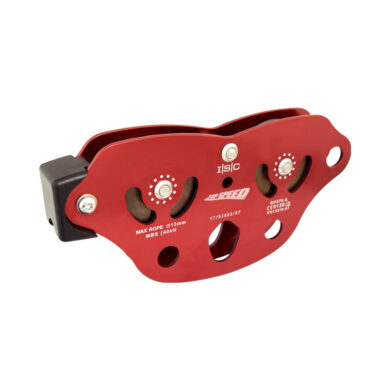 ISC ZipSpeed-L TrolleyPrice range: € 231,00 through € 326,00 Ex VAT
 -
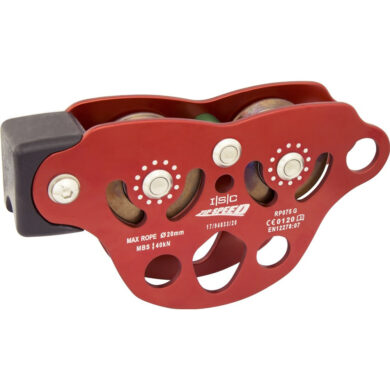 ISC Zipspeed-S TrolleyPrice range: € 191,00 through € 283,00 Ex VAT
 -
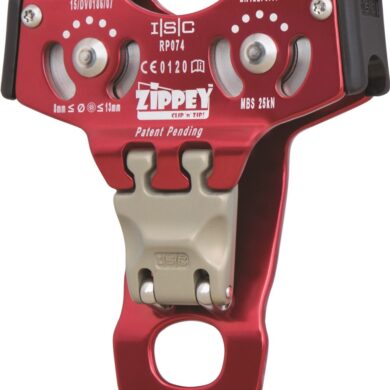 ISC Zippey Clip’n’Zip TrolleyPrice range: € 174,00 through € 266,00 Ex VAT
Durability and maintenance requirements
Long-term profitability depends on how well your gear stands up to the elements and repeated use. All three trolleys use premium materials like 7075 aluminum, but their maintenance cycles vary based on their intended application. Understanding these needs helps you plan your inspection and replacement schedules accurately.
How long do the bearings last?
The bearings in the Zipspeed series are designed to last for several thousand miles under normal operating conditions. In contrast, the Zippey is rated for roughly 1000 miles (1500km) of travel, reflecting its role in shorter, high-frequency adventure park settings. High-spec rubber seals are standard across all models to retain grease and block contaminants.
- Extended bearing life reduces the frequency of hardware replacements.
- Protective anodized finish resists corrosion in coastal environments.
- Replaceable bumpers protect the main chassis from impact damage.
Can these trolleys be used in harsh environments?
Yes, the use of stainless steel and high-grade aluminum makes these trolleys highly resistant to rust. For locations near the ocean or in dusty quarries, the sealed bearing system is a critical feature for maintaining smooth operation. Operators in these areas should prioritize the Zipspeed range for its superior environmental shielding.
- Corrosion resistance for outdoor and coastal park locations.
- Durable side plates that resist wear from frequent handling.
- Easy inspection points to check for wheel and bearing wear.
Versatility and accessory compatibility
A trolley’s value increases when it can be adapted to different course configurations and safety standards. These models offer various attachment points and accessory options to meet specific local regulations. This flexibility allows you to standardize your gear across different types of zipline courses.
What accessories work with the Zippey?
The Zippey is compatible with flat or hooked end-stops and can be fitted with an anti-rollback cam. This makes it highly adaptable for parks that utilize continuous belay systems or require specific finger guards. It is also designed to accept 25mm webbing lanyards directly into the attachment point.
- Anti-rollback cams to increase safety on steep inclines.
- Finger guards for compliance with modern safety standards.
- Direct webbing attachment to minimize lanyard wear and tear.
Do the Zipspeed models support handle bars?
Both the small and large Zipspeed trolleys feature a central hole for mounting accessories like handle bars. This is a vital feature for sit-in harnesses where the rider needs a stable grip for orientation. The large main aperture also ensures that any standard carabiner or snaphook fits securely without binding.
- Accessory bar compatibility for improved rider stability.
- Secondary lanyard holes for redundant safety connections.
- Color-coded collars on axles for easy cable size identification.
Planning a zipline installation? Need expert advice on zipline design?
Get started Today
Frequent asked questions
What cable sizes do these trolleys support?
The Zippey is designed for cables up to 13mm in diameter, while the Zipspeed range is more versatile. Zipspeed models can be ordered with axles for 13mm, 16mm, or 20mm cables. Always verify your cable thickness before purchasing to ensure the correct axle fitment for your line.
Can I use the Zippey on high-speed lines?
The Zippey is rated for speeds up to 60mph (90kph), but it is best utilized on shorter park lines. For sustained high-speed use on long lines, you should upgrade to the Zipspeed-L to prevent overheating. Exceeding recommended usage can lead to premature bearing wear or performance issues.
Is the Zipspeed-L too heavy for guests to carry?
At 1793 grams (63 ounces), the Zipspeed-L is heavy and is usually best suited for permanent installations or guided tours. If your guests must carry their own gear, the 875-gram Zipspeed-S or the 450-gram Zippey are much better options. Reducing carry weight significantly improves the guest experience on walking trails.
Does the Zippey work with one hand?
The Zippey is specifically engineered for effortless one-handed operation via a spring-loaded gate. This makes it much faster to clip on and off compared to traditional tandem pulleys. It is the best choice for minimizing bottlenecks at the start of your zipline platforms.
Are there noise reduction options available?
The Zipspeed-L is available in a noise reduction version featuring specialized nylon wheels. This option is critical for parks operating near residential areas where sound pollution must be minimized. Choosing quiet hardware helps in maintaining good community relations for your adventure business.
Choosing between the Zippey, Zipspeed-S, and Zipspeed-L depends entirely on your course speed and operational needs. By selecting the model that matches your technical requirements, you ensure a safer and more profitable adventure business.