At high throughput, the harness equipping step becomes the limiting factor on riders per hour. If fitting takes 90 seconds instead of 45, a two-lane operation with back-to-back launches loses meaningful daily capacity — and the problem compounds during peak periods when staff are under pressure. Selecting the right harness model for your operation means matching ride position, participant weight range, and equipping speed to the specific line you are running.
Equipping speed and throughput
Which harness designs reduce equipping time?
The Zipline TYRO Sit-harness uses an automatic buckle system on the waist belt that locks positively on closure, removing the need to thread and adjust a manual buckle for each participant. Staff can confirm the fit by feel without a visual check, which reduces the time per participant and lowers the risk of a missed closure. On a line processing 40+ riders per hour, the cumulative time saving is significant.
How do color-coded systems reduce sizing errors?
Both the TYRO and the Zipline Sit Comfort Harness use color-coded webbing or tags to identify sizes instantly. Under peak-hour conditions, a visual size indicator removes a decision point from the equipping sequence and reduces the likelihood of fitting a participant into the wrong size — which requires a full refit and disrupts the flow behind them in the queue.
Why does walkability between lines matter?
On multi-line or multi-activity operations where participants move between platforms without returning to a central equipping station, the harness needs to be comfortable and stable during transit. The TYRO is built for this — its lightweight construction and clean geometry allow participants to hike between activities without the harness interfering with movement or requiring adjustment mid-route. The Sit Comfort model wraps the participant like a suit, providing the same walkability on longer transfers.
What is the participant weight range for each model?
The TYRO covers participants from 1.35 m tall up to 130 kg in a two-size system, which handles the majority of adult participants without requiring a third size in inventory. The Sit Comfort and Superman Zipline Harness extend to 150 kg. Confirm the full weight range of every component in your system — cable, trolley, brake, and harness — and set your operational weight limit at the lowest common denominator.
Ride position and use case selection
When is a seated harness the right choice?
Seated harnesses are the standard for the majority of commercial ziplines. The TYRO positions the participant in an adjustable recline, with shoulder strap adjustment allowing the rider to set their preferred angle before launching. This suits high-speed and giant ziplines where the ride duration warrants a stable, supported position. For panoramic or scenic lines where comfort is a primary draw, the Sit Comfort harness adds a padded seat and breathable Cordura backrest to extend comfort on longer rides.
What does the Superman harness offer as a product differentiator?
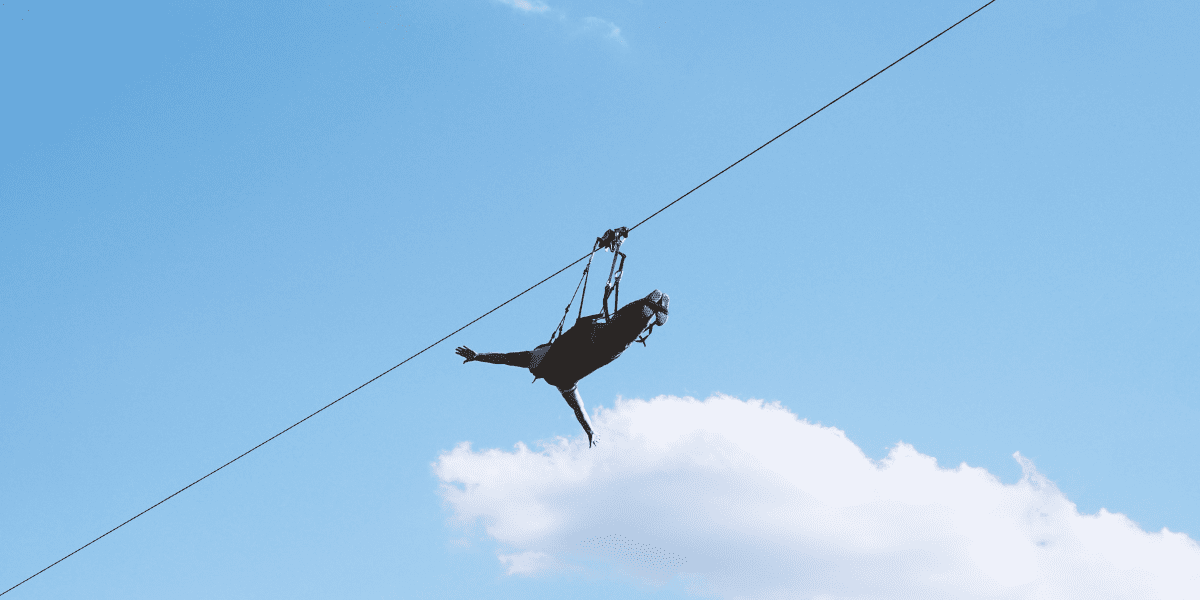
The Superman Zipline Harness positions the rider prone — horizontal, headfirst — which is a distinctly different product from a standard seated zipline. Operators use it to create a second attraction tier on the same infrastructure, often at a premium price point. The prone position requires a 3-point connection trolley; a standard single-connection trolley cannot be used with this harness, and the cable and platform geometry need to be assessed before installation.
What prevents participants from spinning during the ride?
Rotation during flight affects participant comfort and can create a safety issue if the rider arrives at the landing zone sideways. A stabilizer bar compatible with the Sit Comfort harness locks the participant’s orientation relative to the trolley, physically preventing rotation throughout the ride. This is particularly relevant on longer lines where air resistance or uneven loading can induce spin, and on lines where a clear landing-zone approach is required.
Can harnesses carry participant belongings?
The Superman model includes a mobile phone pocket; the TYRO offers an optional removable zipped pouch. For high-volume operations, having a secured storage option on the harness itself removes the need for a separate locker or bag-check process before equipping — a small workflow improvement that compounds over a full operating day.
Safety compliance and certifications
What certifications apply to commercial zipline harnesses?
The TYRO is Category III PPE, certified to EN 12277:2015 and PPE Regulation (EU) 2016/425. Category III covers equipment that protects against fatal or irreversible hazards — the highest PPE classification. The Sit Comfort is certified to EN 1651, the standard that covers seat harnesses derived from paragliding equipment. Confirm the certification applicable to your jurisdiction with your insurer and, where required, the relevant inspection body before procurement.
What rescue attachment points does the TYRO provide?
The TYRO includes lateral and dorsal anchor points rated for evacuation loads. In a mid-line rescue scenario, these points allow a rescue operator to connect directly to the participant harness and manage the extraction without requiring additional rigging. Lateral points are particularly useful where the approach angle limits access to the dorsal point. Verify that your evacuation procedure is compatible with the specific attachment points on the harness model you select.
Does the Superman harness require a specific trolley?
Yes. The prone position is only structurally supported with a 3-point connection trolley that distributes load across the shoulder, hip, and leg points simultaneously. A standard single-point trolley cannot support the horizontal body position safely. This is a system-level procurement decision: the trolley must be specified alongside the harness, and the cable and platform must be assessed for compatibility with the combined system weight and attachment geometry.
Comparison of key specifications
The table below covers the essential specifications for the TYRO, Sit Comfort, and Superman models. Match the load limits, certification, and sizing range to your specific line before specifying a quantity.
| Feature | Zipline TYRO Sit-harness | Zipline Sit Comfort Harness | Superman Zipline Harness |
| Primary Use | Giant & curved zip lines, rope courses | Comfort rides, panoramic views | High-speed, headfirst flying |
| Riding Position | Seated (Adjustable recline) | Seated (Upright suit-style) | Prone (Lying down) |
| Max User Weight | 130 kg (286 lbs) | 150 kg | 150 kg |
| Sizing Options | 2 Sizes (Color-coded) | 5 Sizes (Kids to XL) | 4 Sizes (S to XL) |
| Certifications | EN 12277:2015, Category III PPE | EN 1651 (Paragliding standards) | N/A (Uses 3-point trolley) |
| Key Material | Polyester, 7075 Aluminum buckles | Breathable Cordura fabric | Heavy-duty webbing |
| Special Feature | Auto-buckles for rapid equipping | Stabilizer bar compatible | Aerodynamic design |
| Maintenance | 10-year service life | Replaceable parts available | Modular component system |
Durability and cost of ownership
What is the service life of the TYRO?
The TYRO has a maximum service life of 13 years from the date of manufacture — 10 years in service plus storage time. The 7075 aluminium alloy buckles and polyester webbing are specified for commercial cycle loads rather than occasional use. Track the manufacture date on each unit: PPE that has exceeded its rated lifespan must be retired regardless of apparent condition.
How does modular design reduce replacement costs?
The Superman harness uses an interchangeable lanyard system and sewn-in mounting bridle, allowing worn components to be replaced individually rather than replacing the full harness. This is relevant on high-cycle operations where lanyards and bridles see more wear than the harness body. A modular maintenance approach lowers the replacement cost per cycle and reduces inventory requirements for spare units.
What accessories extend the operational range of each harness?
An evacuation strap or Y lanyard can be added to the TYRO without requiring a harness change, allowing the same unit to cover both standard operation and an evacuation scenario. The Sit Comfort’s stabilizer bar compatibility means the same harness inventory serves both rotation-controlled and standard rides. Accessory compatibility should be confirmed against the harness model version on your current procurement date — accessories are version-specific.
What is the lead time for the Superman harness?
The Superman harness is made to order with an 8 to 10 week lead time. For operators planning a season opening or a new attraction launch, this means the harness order needs to be placed before the rest of the fit-out schedule allows. Procurement planning for made-to-order PPE should be confirmed at the project planning stage, not after the cable and platform installation is complete.
Can harnesses be branded with a park logo?
The TYRO is available with customised embroidered logos on orders of 20 units or more. For operators running multiple lines or acquiring a fleet replacement, the minimum order threshold is easy to reach. Branded harnesses are visible throughout the rider journey from equipping through to post-ride photos — a consistent brand presentation that operates as low-cost marketing at no additional per-unit cost.
Planning a zipline installation? Need expert advice on zipline design?
Get started Today
Frequently asked questions
How many harnesses should a commercial zipline operation hold in inventory?
A working rule is to hold enough harnesses to equip your maximum simultaneous rider count across all active lines, plus a 20–30% buffer to cover units in inspection or rotation out of service. On high-volume operations, a unit being held for inspection should not create a constraint on dispatch. Calculate your target inventory based on peak hourly throughput multiplied by average ride duration in hours — that gives you the minimum in-circuit quantity before the buffer.
How should commercial harnesses be stored between sessions?
PPE webbing degrades under prolonged UV exposure and in high-humidity environments. Harnesses should be stored in a dry, ventilated space away from direct sunlight and away from chemicals including cleaning products, solvents, and battery acids. Hanging storage on padded hooks prevents stress concentration on buckle points during storage. The storage environment is a compliance issue: EN 12277 service life calculations assume correct storage conditions throughout.
What triggers mandatory retirement of a harness outside the service life limit?
A harness must be retired immediately on any of the following: involvement in a fall arrest or arrest load event, visible damage to webbing or stitching, buckle or hardware deformation, chemical contamination, or uncertainty about the unit’s history. Service life is the outside limit — condition is the primary criterion. A harness with a known shock load should be retired even if it shows no visible damage, because internal fibre damage is not always visible on inspection.
Is a separate harness required for children on commercial ziplines?
The Sit Comfort comes in five sizes including children’s sizing, making it suitable for mixed-age operations. The TYRO has a minimum height requirement of 1.35 m — participants below this threshold need a different harness model. Check the minimum participant dimensions for each harness model you operate and ensure your pre-ride screening procedure consistently enforces those limits. Age alone is not a reliable proxy for height and weight compliance.
What is the inspection requirement for commercial zipline harnesses?
Commercial PPE requires a documented inspection programme at a frequency specified in your operations manual and the manufacturer’s documentation. EN 12277 requires periodic inspection by a competent person; for Category III PPE, this typically means a qualified inspector rather than an in-house check. Pre-use visual inspection by trained staff is required before every session. Keep inspection records per individual unit — traceability by serial number is required for insurance purposes and incident investigation.
The Hardware Behind a Safe, High-Volume Zipline Operation
The products below are used and specified in the techniques described above. Click any item to explore full specifications and request a quote.
How Automatic Reset Braking Keeps High-Volume Ziplines Running
Magnetic eddy-current braking with automatic reset — ideal for high-throughput commercial courses where minimising staff intervention between riders matters.
Why Modular Spring Braking Is the Operator’s Safety Baseline
The modular go-to for operators who need reliable primary and emergency arrest capability. Configurable to your specific rider weight range and arrival speed.
What It Takes to Safely Stop a Rider Arriving at 72 km/h
Engineered for mega-ziplines running at up to 72 kph. The benchmark high-velocity arrest device for operators running the fastest commercial lines.
The Prone Position: How Superman Ziplines Demand Specialist Harnessing
The specialist prone harness for headfirst Superman configurations — redesigned for faster guest harnessing and a more comfortable ride position.
Trolley Longevity vs. Arrival Speed: Why You Don’t Have to Choose
Built to absorb the impact at landing without compromising speed on the line. The choice for courses where trolley longevity and smooth arrival are both non-negotiable.
Heavy Loads, Long Runs: Specifying Trolleys for Serious Commercial Operations
ISC’s large-capacity trolley for high-load commercial operations — built to the bearing quality and durability standards that serious operators expect.
Browse the full Zipline Safety Solutions range →
-
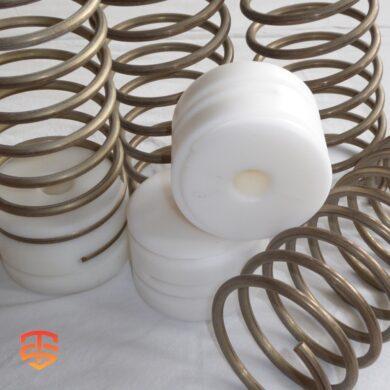 Zipline Spring Brake System | Primary & EAD Braking€ 90,00 Ex VAT
 -
Product on sale
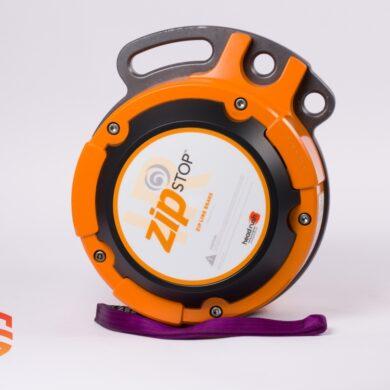 zipSTOP IR Zip Line Brake | Internal Reduction for High-Speed ArrivalPrice range: € 5.742,00 through € 5.894,00 Ex VAT
 -
Product on sale
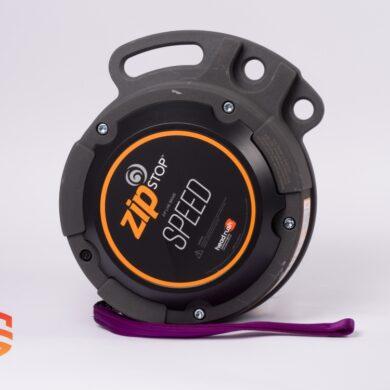 zipSTOP SPEED | High-Velocity Magnetic Braking SystemPrice range: € 6.198,00 through € 6.455,00 Ex VAT