
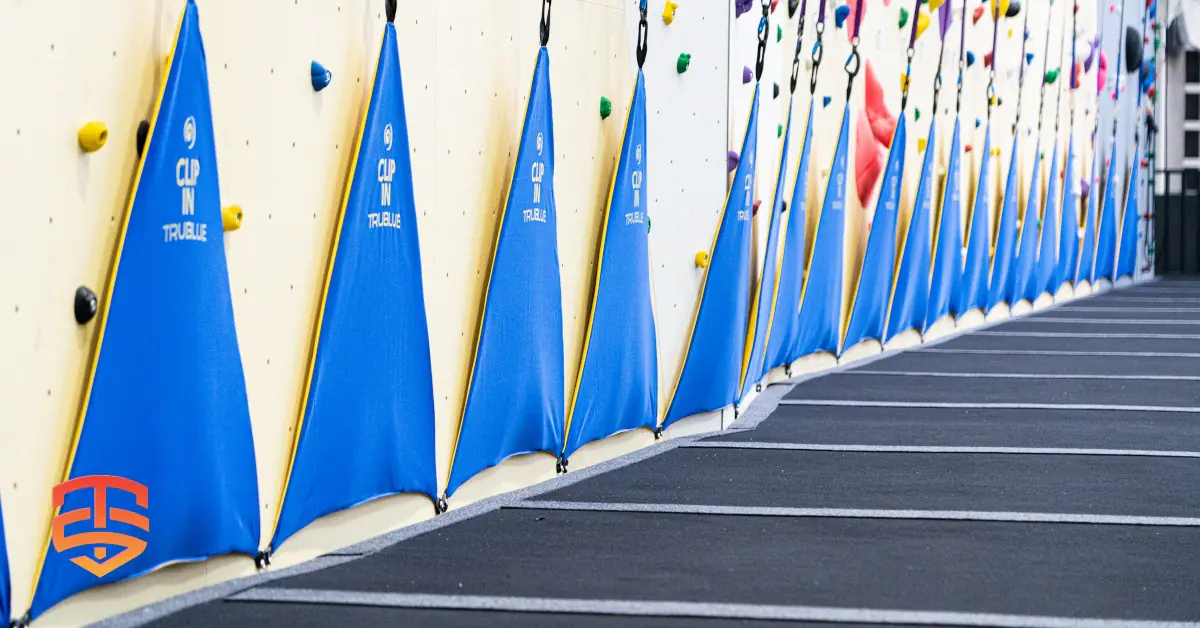
Auto belays let a climbing wall run more lanes with fewer staff, but they introduce a failure mode that conventional belaying does not: a climber can leave the ground without being attached to anything. These “no-clip” falls are uncommon on a per-session basis and entirely preventable, yet they account for the most serious auto belay incidents on record. For an operator, the question is not whether a climber will eventually forget — it is how many independent layers stand between that single lapse and an injury.
Why Climbers Fall From Auto Belays
Almost every serious auto belay accident follows the same sequence: the climber starts up the wall without clipping the carabiner to their harness. It sounds like an error that could only happen to a beginner. The accident record says otherwise. Auto belay lanes are often used alone and for endurance, which means lapping the same routes repeatedly — and repetition, combined with fatigue or distraction, moves a climber onto autopilot. The “it would never happen to me” assumption is itself part of the risk, because experience offers very little protection against a moment of blinkered focus. A smaller share of incidents trace to related errors — clipping to an unrated point on the harness, leaving the carabiner gate unlocked, or starting on the wrong wall section and creating a dangerous fall line — but the missed connection accounts for the most serious cases.
The case studies bear this out. The Climbing Academy in Glasgow documented an experienced climber — fifteen years on the wall — who had been lapping auto belay routes for about an hour on a busy day. Distracted by a move she wanted to repeat, she walked back to the wall and climbed without clipping in, falling several metres onto her back. She was lucky; many are not.
Norway saw the same pattern at national scale, and its response is the clearest evidence that these are an engineering problem rather than a discipline problem. The Norwegian Climbing Federation logged its first no-clip fall in 2015 — a climber who forgot to clip in and fell seven metres, fracturing both legs and his spine — then watched the count rise year on year to twenty incidents in 2023. The most severe, in January 2024, left a climber permanently in a wheelchair after a fall from twelve metres. The federation’s safety committee concluded that blaming individual climbers missed the point: a setup that lets a routine lapse turn into a twelve-metre fall is a system failure, not a personal one.
That reframing produced results. The federation’s National Guidelines for Autobelay Climbing, published in March 2024, set out to design the mistake out of the system rather than train it out of climbers. Incidents fell to seven that year, most of them before the guidelines took hold. The measures were not exotic, and they are the model for everything that follows.
The First Line of Defence: Layout, Procedure and Visual Cues
The cheapest controls come first, and they are procedural and physical. Route-setters can keep the starting footholds behind a barrier so a climber cannot easily begin without dealing with it. Auto belays can be positioned so they are distinct from lead and top-rope lines and visible from the main floor. New users should be oriented before they ever reach a lane — taught to inspect the harness, check the retraction, clip correctly, and confirm the connection — with a staff or buddy check until the routine is established. The principle the Norwegian guidelines settled on is concrete: use rectangular belay gates rather than triangular ones, remove every alternative point a carabiner could be clipped to, and set aside dedicated wall sections for auto belay climbing, so that nothing at the base of a lane makes it easy to do anything other than attach to the device.
The Belay Gate is the physical expression of that idea. The foam-core triangle hangs across the starting holds and carries printed reminders such as “Clip In” and “Climber Above,” so the correct action becomes the only convenient one and bystanders can read the state of the lane at a glance. It comes in medium and large sizes to suit different wall layouts. Treat it for what it is, though: a prompt, not a lock. A distracted climber can still move it aside, which is precisely why a gate works best as the first layer rather than the only one.
The All-Inclusive Service Subscription for TRUBLUE Auto Belays
Get Started Today
Building Redundancy Into the Connection
The next layer addresses a different failure: a primary connection that is made incorrectly rather than skipped entirely. The TRU-LOCK Security Kit creates a full-strength TRUBLUE Dual Connection, adding a second attachment point alongside the primary TRU-LOCK carabiner. The kit pairs an Edelrid HMS Magnum Triple-lock carabiner with a custom tie-in quickdraw and an anti-twist component, girth-hitched to the TRU-LOCK carabiner’s integrated point. In this field, redundancy is a positive term: if the primary connection is compromised, a rated backup is already in place.
The limit of redundancy is worth stating plainly. A second connection protects against a faulty primary attachment, not against a climber who attaches nothing at all. That gap — the climber who never clips in — is the one the remaining layers are built to close.
Sequenced Connection: Removing the Chance to Skip a Step
The TRU-CLIP Connector standardises how climbers attach to the auto belay through a sequenced connection: the steps have to be completed in order, which reduces the chance of an incomplete or out-of-sequence attachment going unnoticed. It also provides an audible alert if the connection is broken while the lane is in use. For an operator, the operational value is consistency — every climber clips in the same way, leaving fewer ambiguous connections for staff to second-guess across a busy session.
Catching the Error That Slips Through: Height-Based Detection
The final automated layer assumes every preceding one has failed. The TRU-ALERT Height Sensor mounts on the climber’s harness and detects ascent without a proper connection. It triggers an initial audio and visual warning at 1.5 metres and a continuous alarm at 2.5 metres that sounds until a staff member intervenes. The unit weighs 46 grams, charges over USB-C, needs no wall alterations, and supports both manual and remote reset.
TRU-ALERT and TRU-CLIP are designed to work in tandem: the connector reduces errors while the auto belay is in use, and the sensor catches the climber who is not clipped in at all. Its real contribution is that it does not depend on a staff member happening to look up at the right lane at the right second — the layer that human supervision is least reliable at covering.
Why No Single Measure Is Enough
Each control answers a different question. A gate makes the correct action the easy one. A sequenced connector standardises how that action is performed. A dual connection protects against a poor primary attachment. A height sensor catches the connection that was never made. None of them removes the climber’s responsibility to clip in, and none replaces trained staff and a written operating procedure. The operators who reversed Norway’s accident trend did it by combining measures, and that is the right model: layered controls, chosen so that the failure of any one of them is caught by another.
The commercial case follows the safety case. A no-clip fall is the kind of incident that closes lanes, triggers investigations, and erodes the trust a facility depends on. Spread across procedure, layout, and a few targeted devices, the cost of prevention is modest against the cost of a single serious accident — and it keeps the wall open.
Frequently Asked Questions
What causes most auto belay accidents?
The dominant cause is the no-clip fall: a climber starts up an auto belay lane without attaching the carabiner to their harness. It is rarely a hardware failure. It is a human-factors error driven by distraction, fatigue, and the autopilot that sets in when climbers lap the same routes for endurance.
Can a belay gate alone prevent no-clip falls?
A belay gate reduces the risk by blocking the starting holds and prompting the climber to clip in, but it is a prompt rather than a physical lock. A distracted climber can still bypass it. It works best as the first layer in a system that also includes procedure, connection hardware, and detection.
Do experienced climbers still forget to clip in?
Yes. Documented incidents involve climbers with many years of experience. Repetition and familiarity can make the routine feel automatic, which is exactly when a step gets skipped. Experience does not remove the risk, so prevention measures should never assume a “competent climber” exemption.
How do the TRU-CLIP Connector and TRU-ALERT Height Sensor work together?
They cover different points in the same failure chain. The TRU-CLIP Connector enforces a consistent, sequenced attachment while the auto belay is in use, while the TRU-ALERT Height Sensor detects a climber ascending without being clipped in and raises an alarm at height. Used together, they address both an incorrect connection and a missing one.
What to Consider Before You Spec an Auto Belay System
The systems and accessories discussed above are used on professional climbing walls worldwide. Explore each to find the right fit for your wall configuration and operational setup.
Auto Belay Buying Guide: What to Look For Before You Spec a Climbing Wall
Wall height, expected cycle counts, and your inspection regime all influence which auto belay system belongs on your wall. Browse the full range of certified vertical auto belay systems for commercial climbing operations.
Why the TruBlue IQ Is the Default Choice for High-Traffic Climbing Walls
The TruBlue IQ combines magnetic braking with a speed-sensing mechanism that adjusts descent rate to the climber’s weight — delivering a smooth, controlled lowering experience for every rider regardless of size.
Speed Climbing and Auto Belay: What Changes When Every Second Counts
Speed climbing demands a faster retraction rate than recreational walls require. The TruBlue Speed is engineered specifically for competition and training walls where rapid reset between attempts is part of the format.
When to Replace Your Auto Belay Webbing — and What Happens If You Wait Too Long
Webbing is the most wear-exposed component in any auto belay system. Browse certified TruBlue replacement webbing and understand the inspection intervals that keep your units in service and your liability in check.
The Connector Your Climbers Use Every Single Session: Why It Deserves More Attention
The Tru-Clip is the interface between your climber and the auto belay system — designed for one-handed connection, misuse resistance, and the thousands of attach-detach cycles a busy wall puts it through every month.
The Sensor That Catches What Staff Can’t Always See
The Tru-Alert height sensor monitors climber position and triggers an alert when someone reaches the top unclipped. It is the operational safety net for busy walls where staff cannot maintain a direct sightline to every route at all times.
Browse all Vertical Auto Belay Systems →
-
Product on sale
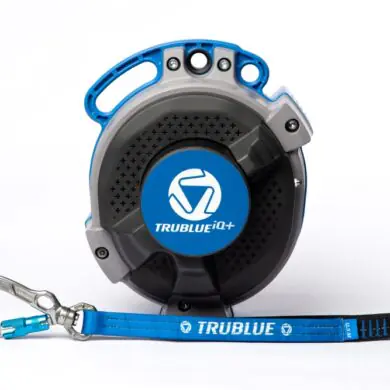 TRUBLUE iQ+ Auto Belay | Catch-and-Hold Projecting TechnologyPrice range: € 4.465,00 through € 5.157,00 Ex VAT
 -
Product on sale
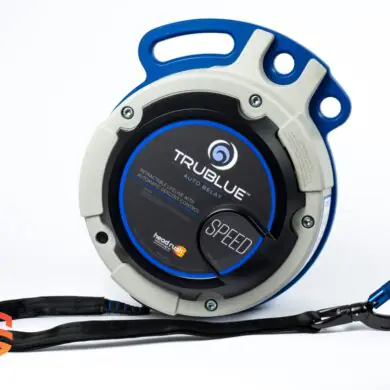 TRUBLUE Speed Auto Belay | Competition-Grade Speed Climbing SystemPrice range: € 2.845,00 through € 3.360,00 Ex VAT
 -
Product on saleTRUBLUE iQ Auto Belay – Magnetic Auto Belay System for Climbing WallsPrice range: € 2.845,00 through € 3.465,00 Ex VAT