
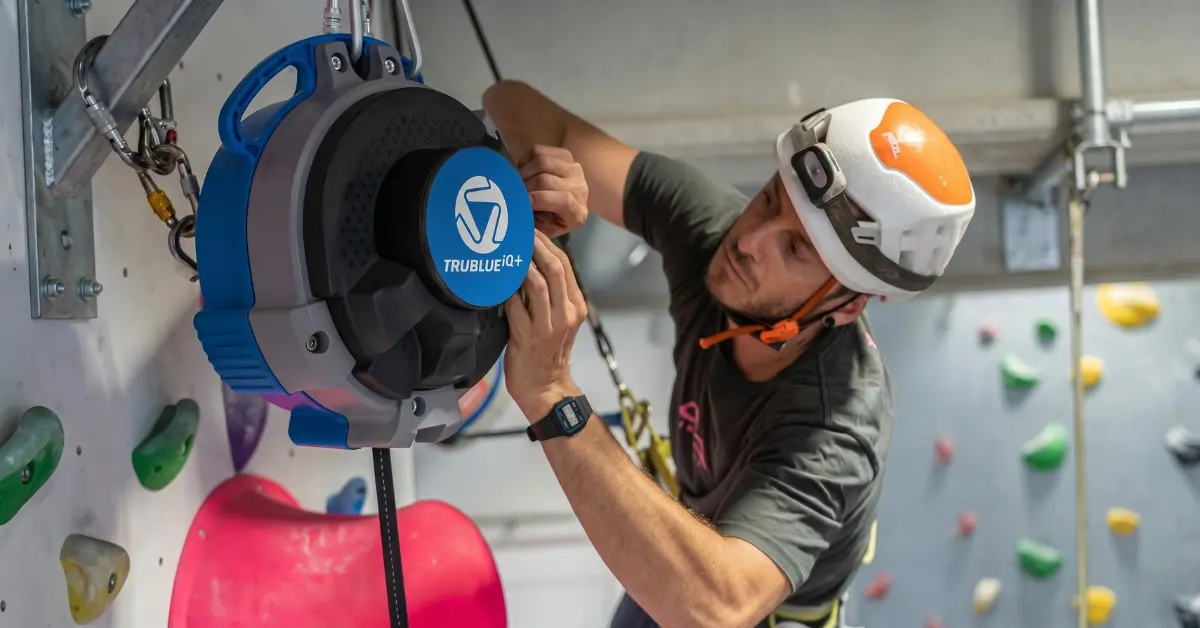
Every auto belay on your climbing wall has to come out of service at least once a year. That is not optional — it is a manufacturer requirement and a condition of operating safely. What is optional is how you handle the window when the device is off the wall, and that decision quietly shapes your revenue more than most operators expect.
Why every auto belay comes out of service
An auto belay is a life-safety device, and like any life-safety device it carries a fixed service schedule that does not bend around your booking calendar. TRUBLUE auto belay devices follow a clear interval: the first service falls 15 months after the manufacturing date, then every 12 months after that.
Each service is a full strip-down inspection. The webbing, the braking mechanism and the internal components are checked, worn parts are replaced, and the device is tested across its rated weight range before it is recertified for another year of operation. None of that can happen while the device is hanging on your wall — which is exactly where the operational question begins.
Send-in service: where the real cost hides
The traditional model is simple. You take the device down, ship it to a service centre, and wait for it to come back. The service itself is routine. The problem is the gap. Across the full turnaround — packing, freight out, the inspection queue, and freight back — that climbing station earns nothing.
There is a second, less obvious cost. Devices bought together reach their service dates together. Without deliberate scheduling, several lanes can fall due in the same window, and a cluster of closures lands at once. For a single wall in a quiet season, that gap may not matter. For a bank of auto belays running through a busy summer, every closed station is throughput you cannot recover.
The swap model: service as continuity, not downtime
A swap-based service programme removes the gap entirely. Instead of waiting for your own unit to return, you receive a recertified replacement from a managed fleet. You fit the replacement, send your device in for service, and the station never closes. Your unit is inspected and recertified on exactly the same schedule — it simply happens without your wall going dark.
Framed correctly, annual service stops being a maintenance interruption and becomes a continuity arrangement. The safety obligation is met in full, the device — whether a TRUBLUE iQ or another unit in your fleet — is recertified to the manufacturer standard, and the revenue keeps running while it happens.
Putting numbers to it: a simple downtime calculation
The case for a swap programme is an arithmetic one, and you can estimate it with three figures you already know:
- the number of auto belays you operate
- the revenue each station generates on an average operating day
- the number of days a device is off the wall under send-in service
Multiply the three together. As an illustration only: a site with six auto belays, each station contributing roughly €200 on an average day, with a ten-day send-in turnaround, gives 6 × €200 × 10 — in the region of €12,000 of operating capacity removed across an annual service cycle. Substitute your own figures; the point is the order of magnitude. Most multi-wall operators find the lost-revenue line is larger than the cost difference between send-in service and a swap arrangement.
When a swap programme makes sense — and when send-in is fine
A swap programme is not automatically the right answer, and it is worth being honest about that. If you run a single device that you can service in a genuinely quiet period, sending it in is perfectly reasonable. The downtime costs you little because the station was not earning much during that window anyway.
The model earns its place when downtime carries a real price: multiple devices, high participant traffic, or a peak season you cannot afford to interrupt. The deciding factor is not the size of your site in the abstract — it is the calculation above. Auto belays already change the staffing and throughput economics of a climbing wall, as covered in why auto belays boost your business; how you service them decides whether that advantage holds through the busiest weeks of the year.
Frequently asked questions
How often does an auto belay need to be serviced?
The manufacturer schedule places the first service 15 months after the manufacturing date, then every 12 months thereafter. Annual service is a condition of safe operation and of keeping the device warranty valid.
Can climbers keep using the wall while an auto belay is serviced?
Only if you have a replacement device on the wall. Under standard send-in service the unit is off-site for the full turnaround, so that station is closed until it returns. A swap programme keeps the station open by issuing a recertified device in its place.
Is a recertified swap device as safe as my own?
Yes. A fleet swap device is inspected, tested across its rated weight range, and recertified to the same manufacturer standard your own device is held to. It is a fully certified life-safety unit, not a temporary stand-in.
Does a swap programme cost more than standard service?
A swap programme is usually a subscription rather than a per-service fee, so the headline cost can look higher. The fair comparison is total cost: the subscription against the lost-revenue line from closed stations under send-in service. For higher-traffic sites the uptime typically outweighs the difference.
How many auto belays make a swap programme worthwhile?
There is no fixed threshold. Run the downtime calculation for your own site — devices, daily revenue per station, and turnaround days. Multi-wall operations in high-traffic seasons tend to cross the line; single-device sites with off-season flexibility often do not.
Mapping your service dates against your busiest periods is the first step to deciding which model fits your operation. Talk to a specialist about a service plan built around your fleet and your calendar, or request a quote to compare the options for your site.
Running a Profitable Adventure Business Starts With the Right Equipment
The topics covered in this article connect directly to the gear and services that serious operators rely on. Explore each area to understand what belongs in your operation.
What Every Zipline Operator Needs to Know About Safety Compliance
Brakes, harnesses, and trolleys are not just equipment choices — they are liability decisions. Browse the full range of certified zipline safety solutions built for commercial operations.
How Auto Belay Systems Cut Staffing Costs Without Cutting Corners on Safety
Vertical auto belays allow climbers to operate independently, reducing the number of staff needed on the floor while maintaining certified safety standards at every station.
Free Fall Attractions: The Premium Experience That Justifies a Premium Ticket
Free fall devices deliver a high-adrenaline experience that stands apart from standard course elements — and commands the pricing to match. Explore what belongs in a revenue-optimised attraction mix.
Continuous Belay vs. Traditional: The Decision That Shapes Your Entire Operation
Your belay system choice determines throughput, staffing levels, and guest experience in one go. Browse certified ropes course belay systems designed for high-volume commercial use.
Building a Course That Lasts: What Commercial-Grade Ropes Course Equipment Actually Means
Consumer and commercial equipment are not interchangeable. Explore the elements built for the daily cycle counts, rider weights, and inspection requirements of a professional operation.
The Gear Your Staff Depend On: Professional Equipment for Adventure Operations
From rescue equipment to inspection tools, the professional category covers what your team needs to operate safely, respond effectively, and stay compliant with industry standards.
Not Sure Where to Start? Our Advisory Services Are Built for Operators Like You
From feasibility and concept design through to staff training and lifecycle management — work with specialists who have built and operated the kind of attraction you are planning.
Browse the full Thrill Syndicate product range →
-
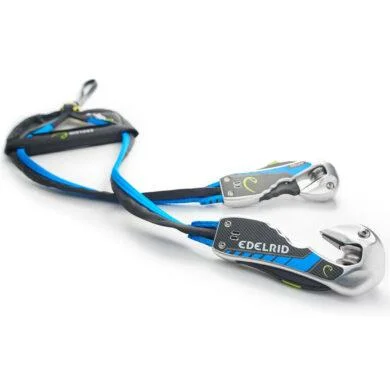 Edelrid Smart Belay X | Intelligent Smart Belay SystemPrice range: € 544,00 through € 623,00 Ex VAT
 -
Product on sale
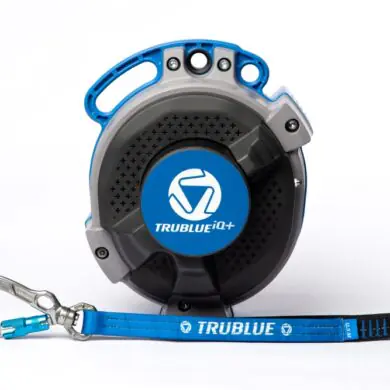 TRUBLUE iQ Auto Belay – Magnetic Auto Belay System for Climbing WallsPrice range: € 2.845,00 through € 3.465,00 Ex VAT
 -
Product on sale
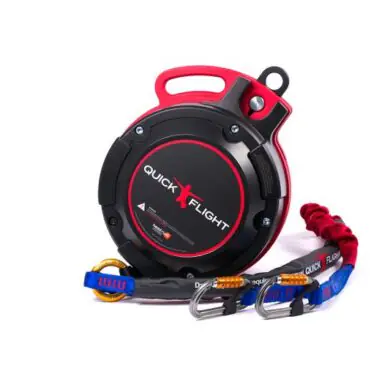 QuickFlight Free Fall Device | High-Throughput ThrillPrice range: € 4.036,00 through € 4.321,00 Ex VAT