
You have the perfect location. A hillside with a stunning view, a valley ready to be crossed, or an open space in your adventure park just waiting for a new anchor attraction. The vision is clear: a thrilling, high-capacity zipline that draws crowds and boosts revenue. But between that vision and a grand opening lies a path filled with technical questions, engineering challenges, and significant financial risk. How do you know if the slope is right? Will riders arrive at the end platform safely and consistently? What forces will the anchors need to withstand? Answering these questions on a construction site is a recipe for budget overruns and delays. The smart move is to answer them first, with a comprehensive Zipline Feasibility Study. It’s the essential first step that transforms a great idea into a viable, data-backed project plan.
Why a Zipline Feasibility Study Is Your Most Important First Investment
This initial analysis is the bedrock of a successful project, providing a clear, data-driven green or red light before you commit to major capital expenditures.
Embarking on a zipline construction project without a feasibility study is like navigating a ship without a map. You might eventually reach a destination, but the journey will be fraught with unnecessary risks, unexpected costs, and the constant threat of hitting a project-sinking iceberg. A professional Zipline Feasibility Study is your navigational chart. It’s a modest, upfront investment that protects your much larger downstream investments in engineering, materials, and labor. By identifying potential “red flags” at the conceptual stage, you can either adjust your plan with minimal cost or pivot away from a non-viable concept, saving you a fortune in the long run. This proactive approach fundamentally shifts your project from one based on guesswork to one founded on sound engineering principles and predictive analysis. It’s the single most effective tool for risk mitigation in the early stages of development.
The benefits of starting with a thorough study extend far beyond simple risk management. It provides a strategic advantage that streamlines the entire development process.
- Eliminate Costly Rework: The most expensive problems are those discovered during or after construction. A feasibility study uses simulation to find these problems on a computer screen, not on the ground. Correcting a trajectory issue or a tension miscalculation in a digital model costs virtually nothing; correcting it with steel and concrete can be financially devastating.
- Accelerate Your Timeline: When your engineering and construction teams receive a project brief backed by a positive feasibility report, they have a clear and validated starting point. This eliminates the lengthy and often frustrating process of initial site analysis and speculation. The critical data is already there, allowing for a much faster transition into detailed design and, ultimately, a quicker launch.
- Strengthen Stakeholder Confidence: Whether you’re presenting to investors, a board of directors, or a planning committee, a professional feasibility report demonstrates due diligence. It shows that your proposal is not just an idea but a technically vetted concept, increasing confidence and making it easier to secure funding and approvals.
- Optimize Your Investment: The study doesn’t just give you a yes or no answer. It provides the foundational data needed to optimize the attraction for both thrill and safety. You can begin to make informed decisions about the rider experience you want to create, backed by preliminary data that confirms it’s possible.
Deconstructing the Data: What a Feasibility Study Reveals
This report translates your site’s raw topography into a clear picture of your zipline’s potential performance, safety, and structural requirements.
At its core, a Zipline Feasibility Study is about data. We take a few simple inputs—primarily the GPS coordinates for your desired start and end points—and run them through sophisticated simulation software. This process generates a preliminary report that answers the most fundamental questions about your proposed installation. It’s not full engineering, but it’s the essential reconnaissance needed before you deploy the main force. The findings are broken down into several key areas, each providing a crucial piece of the puzzle. Understanding these components helps you appreciate the true value of the analysis and how it directly impacts your future decisions.
Here’s a closer look at what the core deliverables actually tell you about your project:
- Zipline Profile Analysis: This is the starting point. We analyze the horizontal distance (span) and the vertical drop between your start and end points. This gives us the average slope, which is the primary factor determining a zipline’s potential for gravity-powered movement. But it goes deeper. The analysis also calculates the initial cable profile, showing how the cable will sag under its own weight (unloaded) and with a rider (loaded). This is critical for ensuring adequate ground clearance across the entire path, a non-negotiable safety requirement.
- Preliminary Speed & Trajectory Simulation: This is where the virtual test ride happens. Using the profile data, we simulate the ride for a range of rider weights, from the lightest children to the heaviest adults. This simulation predicts the rider’s velocity at various points along the line and, most importantly, their arrival speed at the braking zone. The goal is to find the sweet spot: the ride must be fast enough to ensure all riders reach the end platform, but not so fast that arrival speeds become unmanageable for the braking system. This analysis also helps evaluate the potential impact of environmental factors like headwinds or tailwinds.
- Initial Cable Sag & Tension Estimates: A zipline cable is subjected to immense forces. This part of the study provides preliminary estimates of the maximum tension the cable will experience under a load. This calculation is absolutely critical for the next phase of engineering. It directly informs the specification of the cable itself (diameter and construction) and, just as importantly, provides the load data needed for designing the anchor systems at both ends. Without this data, you cannot properly engineer the towers and foundations that are essential for a safe and durable installation.
The Process: From GPS Coordinates to Actionable Report
Our streamlined process is designed to give you maximum insight with minimal input, delivering the clarity you need to move forward with confidence.
We understand that as an operator, your time is valuable. You need clear, actionable information without getting bogged down in a complex or lengthy consultation process. That’s why our Zipline Feasibility Study is designed for efficiency. The entire engagement is built around a simple premise: you provide the location, and we provide the analysis. The process is transparent and straightforward, typically taking only about five working days from start to finish. It begins with the most basic piece of information about your site, something you can find in seconds on a digital map.
The journey from your initial idea to a comprehensive report follows a few simple steps. First, you provide us with the Google Maps coordinates or a topographical survey of your proposed zipline path. We need the latitude and longitude for the start and end points, along with their respective elevations if available. This is all the raw data we need to build a digital model of your site. Once we have this information, our work begins. We input the data into our specialized zip line simulation software, which creates a virtual representation of the terrain and the proposed cable corridor.
From there, our technicians run the series of simulations described earlier. We analyze the profile, test trajectories with different rider weights, and calculate the preliminary forces on the system. We meticulously review the outputs, looking for any immediate red flags—like insufficient slope, excessive arrival speeds, or inadequate ground clearance. The final step is to compile all of these findings into a concise, easy-to-understand Feasibility Report. This document avoids overly technical jargon and instead focuses on answering your main question: is this project technically viable? It will present the key data points, summarize our findings, and provide a clear professional recommendation on whether to proceed to the next phase.
Beyond Feasibility: Paving the Way for Engineering and Construction
The study is not the end of the road; it’s the solid, reliable foundation upon which every subsequent phase of your project is built.
Receiving a positive recommendation from your Zipline Feasibility Study is an exciting milestone. It confirms that your vision is not just possible but has a strong technical basis for success. However, the study’s value doesn’t end with that conclusion. The report itself becomes the foundational document for the entire next stage: Full Engineering & Design. This seamless transition is where you truly begin to see the return on your initial investment. The preliminary data gathered in the study gives the engineering team a massive head start, enabling them to work more efficiently and accurately. They are no longer starting from scratch; they are refining and detailing a concept that has already been validated.
The full engineering phase dives much deeper into the specifics, building upon the framework established by the feasibility study. This is where broad estimates become precise calculations and concepts are turned into detailed construction blueprints. The scope of this phase can be tailored to your specific needs, whether you have an in-house construction team or require a complete turnkey solution. The data from the feasibility report directly informs these critical next steps, ensuring a cohesive and logical project progression from one phase to the next.
The typical scope of a Full Engineering & Design phase includes:
- Detailed Engineering Calculations: This involves an in-depth analysis of the final trajectory, structural loads on towers and anchors, braking forces, and all relevant safety factors to meet or exceed industry standards.
- Component Specification: A complete list of all required hardware is created. This includes specifying the exact cable type and diameter, the appropriate trolley models for the desired performance, and the precise braking components needed to handle the calculated arrival speeds.
- Construction Drawings and Specifications: This is the master plan for your construction team. It provides detailed drawings for the fabrication and installation of towers, anchor systems, platforms, and all other structural elements. It includes the precise instructions for installing the zipline cable and associated equipment to the correct tension and sag specifications. This ensures that what was designed and simulated is what gets built on site.
Zipline Feasibility Study: The First Step to a Profitable Attraction
Ultimately, a Zipline Feasibility Study is more than just a technical report; it’s an investment in certainty. It provides the essential bridge between a promising idea and a sound business case. By leveraging advanced simulation technology early in the process, you replace assumptions with data, mitigate financial risk, and set your project on a clear path to success. It ensures that your final attraction is not only thrilling and safe for your guests but also structurally sound and profitable for your business. Before you break ground, before you order steel, and before you make any major financial commitments, take the single most important step: validate your vision.

FAQs
What information do I need to provide to start a Zipline Feasibility Study? All we need to begin are the Google Maps coordinates (latitude and longitude) for your proposed start and end locations. If you have topographical survey data with elevations, that is also helpful, but not strictly necessary for the initial study.
How long does the feasibility study process take? Our process is designed for speed and efficiency. Once we receive your site coordinates, the complete study, including the final report and recommendation, is typically completed in approximately five (5) working days.
Is this study the same as a full engineering and design plan? No. The feasibility study is the critical preliminary phase. It confirms if the project is technically viable and provides the foundational data needed for the next step. Full Engineering & Design is the subsequent phase where we produce detailed construction drawings and component specifications based on the positive outcome of the study.
What happens if the study finds my proposed location is not feasible? This is one of the most valuable outcomes of the study. Discovering that a site is not viable at this early stage prevents you from investing significant capital into a project destined for failure. You save time, money, and can redirect your resources to finding a more suitable location or a different attraction.
How accurate is the simulation used in the feasibility study? The simulation is highly accurate for its intended purpose, which is to provide a robust preliminary analysis. It reliably predicts performance based on the provided topographical data. The results are more than sufficient to make a confident decision on whether to proceed with the much more detailed and time-consuming full engineering phase.
Planning a zipline installation? Need expert advice on zipline design?
Get started Today
Beyond the Basics: Unveiling Zipline Technology with Expert Analysis
Intrigued by the potential of Zipline technology? You’ve come to the right place! This article provides a solid foundation. But if you’re eager to delve deeper and gain insights from industry experts, keep reading…
- Two-Way Adventure: Bi-Directional Zipline Trolley Solutions
- Considering operating and investing in a zipline?
- 9 Zipline Mistakes You Don’t Know You’re Making
- Magnetic Zipline Braking: A Revolutionary Way to Ensure Safe Rides
- Pros and Cons of Different Zip Line Brakes
- Maximizing Zip Wire Park Revenue with a Speed-regulating zipline trolley
- White Paper on Zipline Emergency Arrest Devices (EAD)
- The Importance of Optimizing Zip Line Design for Rider Speed
- Does your zip line need an emergency arrest device?
- The Magnetic Self-braking Zipline pulley
- Zipline Braking and landing considerations
- Why Zip Line Trolley Bearings Matter
- Whitepaper: Zipline Braking Dynamics
- Zip Line Installation: Give them the Best Ride
- How to startup a Successful Zip Line Business
-
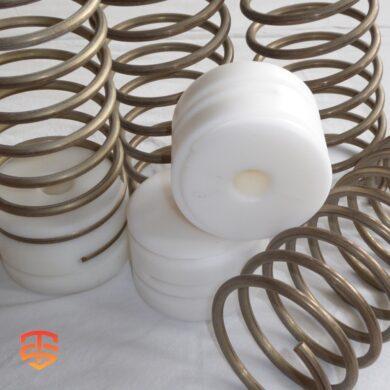
 Zipline Spring Brake System | Primary & EAD Braking€ 80,00 Ex VAT
 -
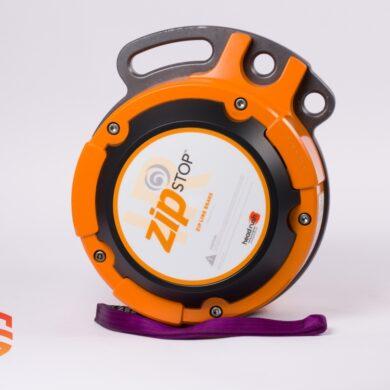
Product on salezipSTOP IR Zip Line Brake | Internal Reduction for High-Speed ArrivalPrice range: € 5.742,00 through € 5.894,00 Ex VAT
-
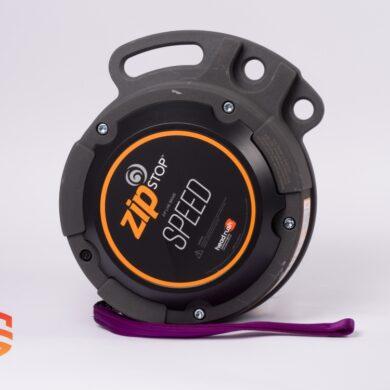
Product on salezipSTOP SPEED | High-Velocity Magnetic Braking SystemPrice range: € 6.198,00 through € 6.455,00 Ex VAT