
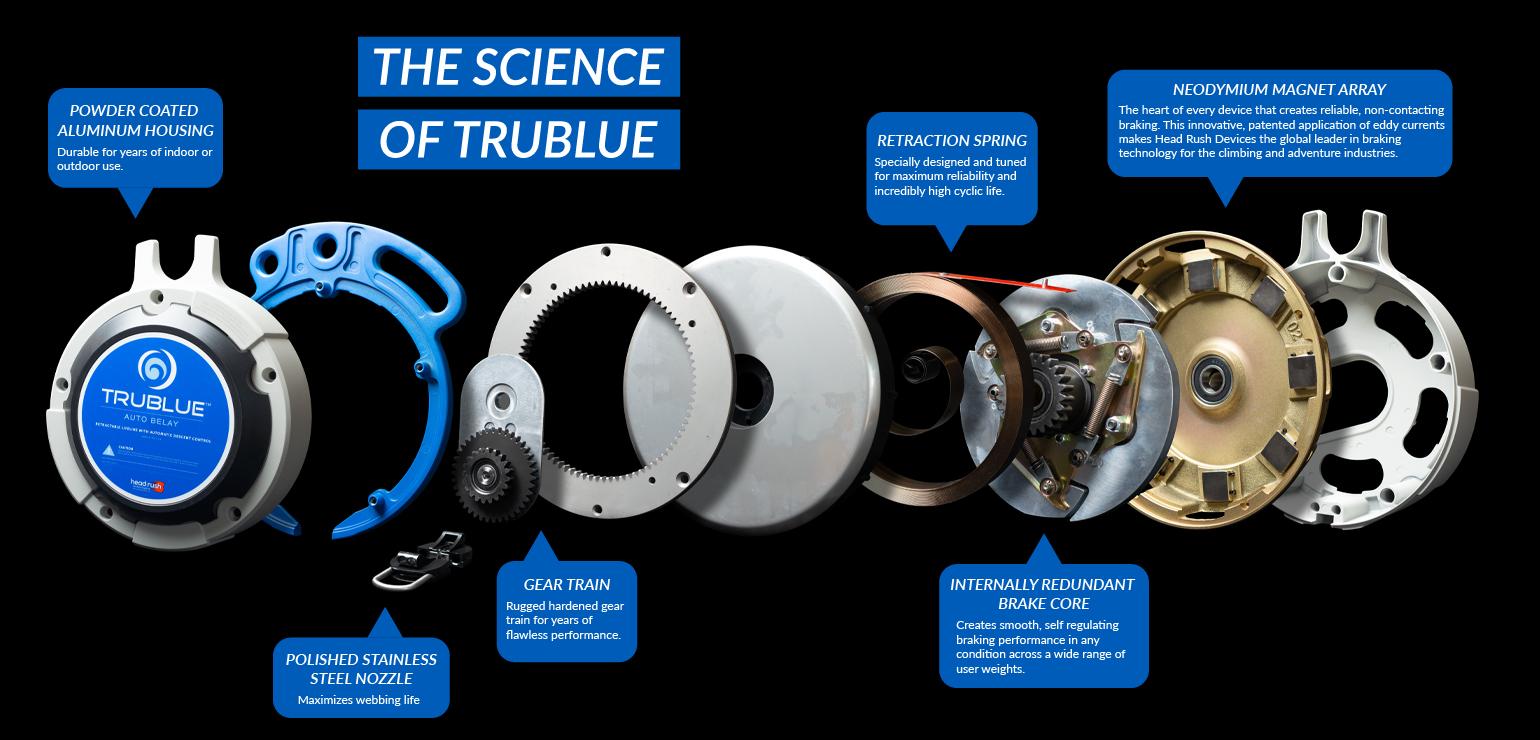
Passive braking — where the system manages deceleration automatically without input from the rider or a staff member — is the operational standard across auto belays, zipline brakes, and free fall devices. All three rely on the same underlying mechanism: eddy current magnetic braking. Understanding how the technology works helps operators evaluate equipment claims, specify the right device for a given application, and explain the maintenance model to insurers and inspection bodies.
The physics of eddy current braking
When a conductive material — typically an aluminium rotor — moves through a magnetic field, the changing flux induces circular electrical currents within the conductor. These are eddy currents: loops of current that flow in closed paths, named for their resemblance to eddies in moving water. The eddy currents generate their own magnetic field, which opposes the motion that created them. The result is a braking force that increases proportionally with speed.
The critical operational property is that no components make contact during braking. The braking force is generated entirely through the electromagnetic interaction between the rotor and the magnet assembly. There is no friction surface to wear, no heat buildup that degrades performance, and no mechanical contact to lubricate or replace. The braking force is also self-regulating: at higher speeds the induced currents are stronger, producing more braking force automatically. This is what makes eddy current braking suitable for participants across a wide weight range without mechanical adjustment between riders.
Application in auto belays
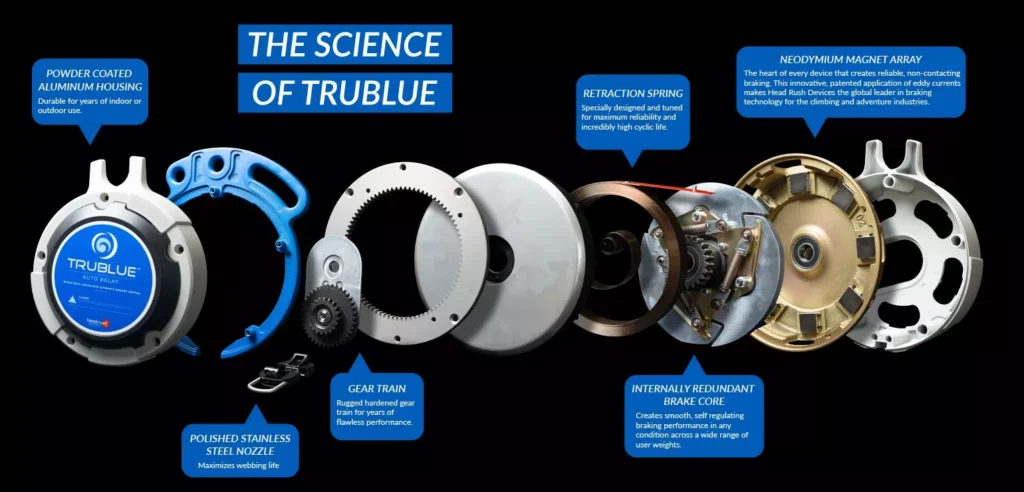
In an auto belay, the eddy current mechanism sits inside the device housing. As a climber descends and the webbing pays out, a rotor assembly spins within a magnetic field. The faster the descent, the stronger the braking force — so a climber who falls from height is decelerated progressively rather than arrested sharply. The self-regulating property means the device adjusts automatically to the climber’s weight: a heavier participant pulls the webbing faster, spinning the rotor more deeply into the magnetic field and generating proportionally more resistance.
TRUBLUE auto belays apply this principle in a device rated for high-cycle commercial operation. The TRUBLUE iQ is certified to EN341:2011 (descender devices) and EN360:2002 (retractable fall arresters), and has been tested to 10× Class A — the most stringent load test requirement for auto belays. With over one billion recorded descents annually across more than 60 countries, the operational dataset behind the device is substantial. The absence of friction components means performance does not degrade over a session the way friction-based systems can when used intensively or in wet conditions.
How eddy current braking affects the climbing experience
The practical difference between eddy current and friction auto belays is most noticeable on the climbing wall rather than during descent. A friction-based retraction system applies constant resistance as the climber moves upward — the device pulls against the climber because the mechanism that controls descent also resists upward travel. An eddy current device retains the webbing at low tension, applying braking force only when descent speed triggers the rotor. The result is a device that climbers are less aware of while climbing and more aware of during descent, which is where awareness is operationally useful.
Application in zipline braking
Eddy current braking on a zipline works on the same electromagnetic principle but in a linear rather than rotary configuration. As the trolley approaches the brake unit, a conductive element enters the magnetic field and the resulting eddy currents generate a retarding force. The braking force scales with arrival speed — a faster or heavier rider receives more braking force automatically, without any mechanical adjustment between launches. This is the property that enables passive braking at the landing platform without a staff member positioned to manage deceleration manually.
The zipSTOP Zip Line Brake applies eddy current braking as a fixed installation at the landing platform. Different models cover different speed and weight ranges — selecting the correct model requires knowing the line’s maximum arrival velocity and the participant weight range the system will handle. The brake resets automatically after each ride, which removes a manual reset step from the turnaround sequence between riders.
Trolley-integrated magnetic braking
The Mag Brake Trolley integrates the eddy current brake mechanism into the trolley unit itself rather than at a fixed landing platform installation. The braking force increases progressively as the trolley travels toward the end of the cable, decelerating the rider over the full final section of the run rather than at a single brake point. This approach eliminates the need for a fixed brake structure at the landing zone — particularly relevant on long-distance or remote installations where a powered brake structure is impractical, or where the landing platform footprint is constrained.
Application in free fall devices
Free fall devices use gravity to generate a genuine freefall sensation, then arrest the participant’s descent before ground contact. The braking challenge is more demanding than on an auto belay or zipline: the device must allow an unconstrained free fall phase before applying deceleration, which means the transition from free fall to controlled descent happens at relatively high speed. Eddy current braking handles this well because the braking force scales automatically with speed — the device generates maximum retarding force exactly when it is most needed.
The QuickFlight Free Fall Device uses eddy current braking as its primary deceleration mechanism, allowing a participant to descend in genuine free fall before the system captures and decelerates them to a safe landing. As with auto belays and zipline brakes, the self-regulating nature of the mechanism means participants across the device’s rated weight range experience a consistent deceleration profile without operator adjustment between rides.
Frequently asked questions
Does eddy current braking performance degrade in wet or cold conditions?
The braking force in an eddy current system is generated electromagnetically — there is no friction surface whose performance is affected by moisture or temperature in the way a mechanical brake is. Cold temperatures can affect the conductivity of the rotor material and the performance characteristics of any associated electronics, but the fundamental braking mechanism is more environmentally stable than friction-based alternatives. Verify the manufacturer’s rated operating temperature and humidity range for the specific device before deploying in exposed or cold-weather environments.
What is the maintenance requirement for eddy current braking systems?
Because no components make contact during braking, there is no wear surface to monitor or replace on a cycle-count basis. Maintenance requirements focus on the mechanical components that do experience wear — webbing or cable guides, housing seals, and mounting hardware — rather than the braking mechanism itself. Annual inspection and service by a qualified technician remains a regulatory requirement regardless of the braking technology. The absence of friction wear does not remove the inspection obligation; it changes what the inspection focuses on.
How does eddy current braking handle participants at the extremes of the weight range?
The self-regulating property of eddy current braking means the device produces more braking force at higher speeds automatically. A heavier participant generates more kinetic energy and moves the conductive element through the magnetic field faster, inducing stronger eddy currents and a proportionally higher braking force. This is the mechanism that allows a single device to provide a consistent deceleration experience across a wide participant weight range. The rated weight range is still a hard limit — the self-regulation operates within the device’s specification, not beyond it.
Can eddy current braking devices be serviced in-house?
The braking mechanism inside an auto belay or zipline brake is a sealed assembly that requires manufacturer-authorised service. Opening the housing outside of a certified service procedure voids the device’s certification and should not be done in-house regardless of apparent condition. Annual service through the manufacturer’s authorised programme is required to maintain the device’s certification status and to satisfy insurance requirements. Some operators run a managed fleet service programme that ensures devices are in service while others are in the service cycle — this is particularly relevant for high-volume operations where taking devices offline creates a capacity constraint.
Is eddy current braking suitable for variable-speed applications like bi-directional ziplines?
Eddy current braking is a passive mechanism — it responds to the speed and mass of the object moving through the field but does not apply force in the direction of travel. On a bi-directional motorised zipline, the active drive mechanism manages speed in both directions and the braking function at the landing is separate from the return drive. The Mag Brake Trolley’s integrated braking operates during the descent phase; the motorised return is handled by the drive system. The two mechanisms are independent and compatible within a bi-directional system design.
What to Consider Before You Spec an Auto Belay System
The systems and accessories discussed above are used on professional climbing walls worldwide. Explore each to find the right fit for your wall configuration and operational setup.
Auto Belay Buying Guide: What to Look For Before You Spec a Climbing Wall
Wall height, expected cycle counts, and your inspection regime all influence which auto belay system belongs on your wall. Browse the full range of certified vertical auto belay systems for commercial climbing operations.
Why the TruBlue IQ Is the Default Choice for High-Traffic Climbing Walls
The TruBlue IQ combines magnetic braking with a speed-sensing mechanism that adjusts descent rate to the climber’s weight — delivering a smooth, controlled lowering experience for every rider regardless of size.
Speed Climbing and Auto Belay: What Changes When Every Second Counts
Speed climbing demands a faster retraction rate than recreational walls require. The TruBlue Speed is engineered specifically for competition and training walls where rapid reset between attempts is part of the format.
When to Replace Your Auto Belay Webbing — and What Happens If You Wait Too Long
Webbing is the most wear-exposed component in any auto belay system. Browse certified TruBlue replacement webbing and understand the inspection intervals that keep your units in service and your liability in check.
The Connector Your Climbers Use Every Single Session: Why It Deserves More Attention
The Tru-Clip is the interface between your climber and the auto belay system — designed for one-handed connection, misuse resistance, and the thousands of attach-detach cycles a busy wall puts it through every month.
The Sensor That Catches What Staff Can’t Always See
The Tru-Alert height sensor monitors climber position and triggers an alert when someone reaches the top unclipped. It is the operational safety net for busy walls where staff cannot maintain a direct sightline to every route at all times.
Browse all Vertical Auto Belay Systems →
-
Product on sale
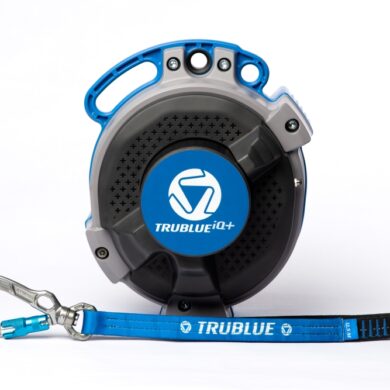 TRUBLUE iQ+ Auto Belay | Catch-and-Hold Projecting TechnologyPrice range: € 4.465,00 through € 5.157,00 Ex VAT
 -
Product on sale
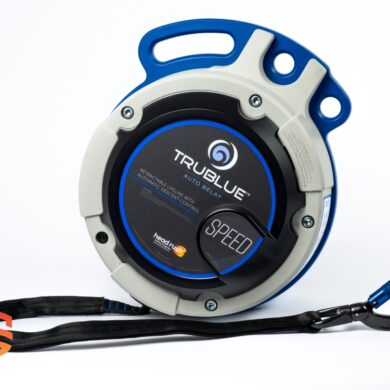 TRUBLUE Speed Auto Belay | Competition-Grade Speed Climbing SystemPrice range: € 2.845,00 through € 3.360,00 Ex VAT
 -
Product on saleTRUBLUE iQ Auto Belay – Magnetic Auto Belay System for Climbing WallsPrice range: € 2.845,00 through € 3.465,00 Ex VAT