

When a rescuer or a casualty hangs on a rope, the equipment has to work the first time, under load, in the hands of whoever is on shift. Mountain rescue teams, fire brigade height rescue units and adventure park rescue teams ask the same three things of a rope system: reliability under load, speed of set-up, and devices that every team member operates the same way.
This guide covers the parts of a rope rescue system, the standards to check, how to choose descenders and hauling kits, ropes and connectors, inspection, and two example kit lists. Industrial rescue teams in wind turbines or high-bay warehouses use the same building blocks; training frameworks such as GWO, FISAT and IRATA describe how teams practise with them.
The rope rescue system in five parts
- Anchors: slings, anchor straps and rigging plates that connect the system to a structure, tree or rock. Build every anchor for the highest load the system can see, including a two-person load.
- Rope: low-stretch kernmantle rope, usually 10,5–11,0 mm, so that descenders, rope grabs and pulleys work as designed.
- Descent control: a descender that lowers a rescuer, a casualty or both, and stops when the operator lets go.
- Mechanical advantage: pulleys and progress capture to lift a casualty or take the load off a fall arrest system.
- Connectors: locking carabiners rated for rescue loads.
A system is only as strong as its weakest part and only as fast as its slowest step. Buying in matched sets – rope diameter, descender range and pulley sheaves that fit together – avoids the most common surprise on a call-out: a device that does not accept the team’s rope.
Why speed matters: suspension trauma
A person hanging motionless in a harness can become critically unwell within minutes (suspension trauma). Rescue plans therefore aim to reach and lower a casualty quickly, and pre-rigged kits that deploy in seconds earn their place on the harness.
Standards to check
Rescue equipment is tested to different standards depending on its job. Check the declaration of conformity and the instructions of each product; these are the standards that come up most often:
- EN 1891 – low-stretch kernmantle ropes
- EN 341 – descender devices for rescue
- EN 12841 – rope adjustment devices for rope access
- EN 1496 – rescue lifting devices
- EN 1498 – rescue loops
- EN 12278 – pulleys
- EN 362 – connectors
- EN 354 – lanyards
- NFPA 2500 and ANSI Z359.4 – for teams that work to North American standards
A standard tells you what a device was tested for, not whether it suits your team’s technique. Train with a device before it goes on the vehicle.
Descenders: work, rescue and evacuation
A rescue descender has to hold two people, lock when the operator lets go, and prevent an uncontrolled descent if the operator panics and squeezes the handle. Three types are common:
- Work/rescue descenders with auto-lock and anti-panic: the ISC D4 is a double-stop device with auto-lock, a panic brake and a rated load of 240 kg (minimum user weight 60 kg) for 10,5–11,5 mm rope. Rope can be back-fed, so it also works for ascending or for emergency hauling in a 2:1 Z-rig. The ISC D5 does the same job on 12,7 mm rope, as used by many North American fire services.
- High-payload descenders: the Edelrid MEGAWATT takes 8,9–11,8 mm rope and up to 230 kg payload and has an integrated anti-panic function.
- Rescue lifting and descent devices: the Edelrid Safe Descent Pro is certified to EN 1496 (class B) and EN 341 (class 1A up to 100 kg, 1B up to 200 kg) for 10,5 mm rope. It lifts and lowers, also two people, and can be driven with a cordless drill – useful for ride evacuations and for rescues where a casualty must be lifted before lowering.
Choose by rope diameter first, then by load (one or two people), then by whether the device must also lift. All devices are in the category Descent & Rescue Devices. The difference between a descender and a self-retracting lifeline is explained in Controlled descent device vs SRL.
Hauling: pre-rigged kits or built systems
Teams lift casualties either with a pre-rigged haul kit or with a system built from pulleys, rope grabs and the main rope.
- HaulerBiner Compact Rescue Kit: three pulley wheels in each carabiner give a 6:1 or 7:1 theoretical mechanical advantage, with a progress capture cam that switches on and off. It uses 6 mm rope, is load-rated to 140 kg with a system MBS of at least 16 kN, is worn on the harness for pick-off rescues and comes in five lengths from 105 cm to 10 m.
- Edelrid KAA Rescue Haul System: a pre-packaged, webbing-based 4:1 system for tensioning, lifting and lowering, certified to EN 354.
- Built systems: a high-efficiency pulley such as the Edelrid Pike Rescue Pulley (46 kN minimum breaking strength, 9 kN working load limit, 6–13 mm rope, 98 % efficiency according to the manufacturer) with rope grabs on the main line. More flexible, but slower to rig and more dependent on training.
Many teams carry both: a pre-rigged kit for fast pick-offs and a pulley set for longer hauls and complex rigging. More pulleys are in Pulleys.
Ropes and connectors
Most European teams standardise on 10,5 or 11,0 mm low-stretch kernmantle rope (EN 1891 type A). The diameter has to match every device on the rope. A permanent core-sheath connection, as in the Edelrid Prostatic SyncTec, keeps the sheath from sliding over the core when it is cut or heavily worn. Choose the length from the highest rescue height plus anchor and reserve, and keep separate, marked ropes for training and for operations.
- Steel carabiners where they rub on rope or structure or carry the anchor; aluminium where weight on the harness matters.
- Locking gates on every life-safety connection; check that the gate opening fits the anchor and the device.
- A cutting tool on the harness: the Edelrid CLIP SCISSORS cut rope and webbing and have an integrated retractor, so they are not dropped at height.
Static ropes and connectors: Ropes and Carabiners & Connectors.
Inspection and lifecycle
Every item gets a pre-use check by the user and a periodic inspection by a competent person, normally at least every 12 months according to the manufacturer’s instructions. Keep one record per item with serial number, date in service, inspections, use in rescues and findings. Retire an item after a severe fall or overload, when the manufacturer’s maximum service life is reached, or whenever an inspection raises doubt. A rope used in a real rescue gets a documented check before it goes back into service.
Thrill Syndicate supports inspection planning and record keeping – see Lifecycle management.
Example kit lists
Starter kit for a rescue team
- 2 low-stretch ropes, 10,5 or 11,0 mm, in the length of the highest rescue plus reserve
- 2 work/rescue descenders with auto-lock and anti-panic
- 1 pre-rigged haul kit
- 2–4 high-efficiency pulleys and matching rope grabs
- Anchor slings and a rigging plate
- 10–15 locking carabiners (steel and aluminium)
- A rescue triangle or casualty harness
- Edge and rope protectors, a cutting tool, rope bags, labels and a record book
Adventure park and zip line rescue kit
- A rescue/evacuation device suited to the course heights
- A pre-rigged pick-off kit
- Static rope matched to the device
- Locking carabiners and slings
- A cutting tool
- A written rescue plan and regular practice (EN 15567-2)
For adventure park rescue in more depth, read Ropes course rescue innovations; for the people behind height rescue, From firefighters to mountaineers. For a team quote, request a quote with the rescue heights, rope diameter and the number of team members.
Frequently asked questions
What equipment does a mountain rescue team need?
A matched rope system: low-stretch kernmantle rope, a work/rescue descender with auto-lock and anti-panic, a haul kit or pulleys with progress capture, anchor material and locking connectors, plus harnesses, helmets, a casualty harness or rescue triangle and a cutting tool. Buy rope and devices as a set so the diameters match.
Which standard applies to rescue descenders?
In Europe, descent devices for rescue are tested to EN 341; devices that also lift are tested to EN 1496, and rope access adjustment devices to EN 12841. Teams that work to North American standards look at NFPA 2500 and ANSI Z359.4. Always check the declaration of conformity of the specific product.
How long does a rescue rope last?
That depends on use, storage and the manufacturer’s maximum service life. Inspect it before each use and at least every 12 months by a competent person, record every rescue, and retire the rope after a severe load, visible core damage, contamination or when the manufacturer’s limit is reached.
What is the difference between a work descender and a rescue descender?
A work descender is rated for one person. A rescue descender is rated for a rescuer plus casualty (typically 200–240 kg), locks when released and usually has an anti-panic function. Many devices, such as the ISC D4, are rated for both work and rescue.
Can adventure park staff use the same rescue kit?
The building blocks are the same, but the kit must match the course: heights, anchors, rope diameter and the rescue plan required by EN 15567-2. Staff need regular practice with exactly the devices kept on site.
The Equipment Professionals Depend On When Working at Height
The gear discussed in this article is used by professionals operating at height, in rescue roles, and in technical environments where certified equipment is a non-negotiable. Explore each category to find what your work demands.
What Separates Professional Safety Gear From Adventure Park Equipment
Work-at-height and rescue gear operates under EN 363 and IRATA standards that differ from EN 15567 — different certification scope, inspection intervals, and load assumptions. Browse the full professional equipment range.
The Fall Arrest Decision: Why the Right Arrester Determines How a Rescue Begins
A fall arrester that locks on a dirty or wet rope under real load behaves differently to one tested in ideal conditions. Browse certified fall arresters rated for the environments your team works in.
Controlled Descent: Matching the Device to the Rescue Scenario
From single-person self-rescue to two-person load scenarios — descent device selection affects not just safety but speed of evacuation. Explore certified descenders for professional and rescue use.
Work Safety Harnesses: Why the Fit and Suspension Tolerance Matter More Than the Label
A harness that passes EN 361 may still cause suspension trauma in an arrest event if the fit is wrong for the wearer. Browse work safety harnesses built for extended wear, restricted access, and fall arrest compliance.
Lanyards for Working at Height: The Case for Adjustable Over Fixed
Fixed lanyards create slack in certain working positions; adjustable lanyards eliminate it. Browse work lanyards designed for the range of postures, anchor heights, and movement patterns your team encounters on site.
Canyoning Equipment: Where Technical Performance Meets Wet, Abrasive Conditions
Canyoning places different demands on harnesses, descenders, and ropes than most vertical environments — prolonged water exposure, abrasive rock, and loaded rope handling under guide supervision. Explore technical canyoning gear.
Browse all Professional Safety Equipment →
-
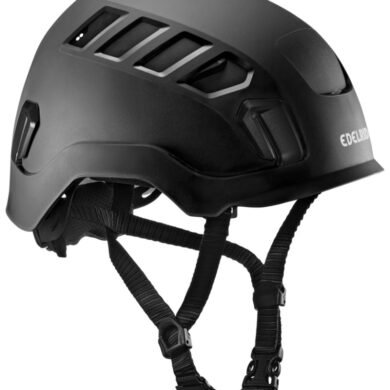 Edelrid Tectum Air Professional Work Safety HelmetPrice range: € 70,00 through € 74,00 Ex VAT
-
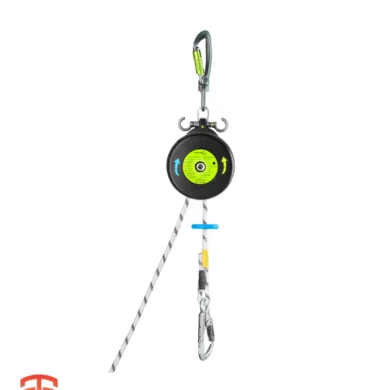 Edelrid Safe Descent Pro | Descent & Rescue devicePrice range: € 1.230,00 through € 1.777,00 Ex VAT
-
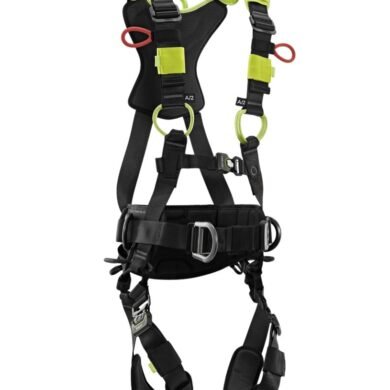 Edelrid FLEX PRO PLUS II | Full Body Harness€ 245,00 Ex VAT