

Specifying a commercial zipline means making decisions about a system, not a product. The cable, the trolley, the primary brake, the emergency arrest device, the platforms, and the inspection programme all interact — a choice made at one point affects what is possible at another. This overview covers each component in sequence, with the decisions and constraints operators need to understand before committing to a design.
The cable
The cable sets the physical parameters everything else is specified against: length, gradient, sag profile, and terminal positions. Commercial ziplines typically use stainless steel or hot-dip galvanized wire rope, specified to EN 13796 or the relevant national standard for cableway installations. Diameter and breaking load depend on span length, expected dynamic loads, and the weight range of participants the line will operate.
The cable decision also determines braking requirements. A longer, steeper line with higher arrival speeds demands a different brake specification than a shorter, gentler run. Work through the cable geometry before specifying any other component — the braking system is designed around the arrival conditions the cable creates.
Launch and landing platforms
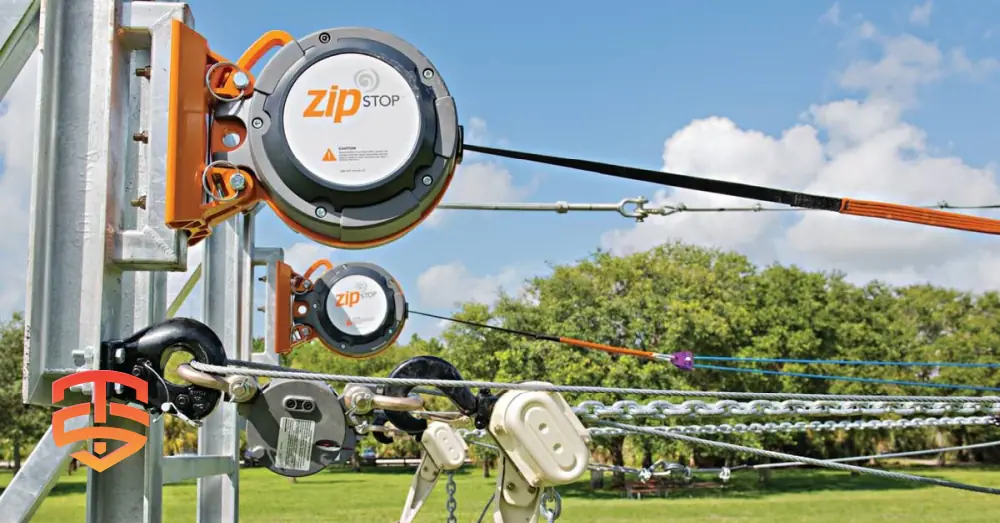
Platform design is driven by topography, braking system requirements, and operational workflow — not just rider comfort. Where natural elevation is sufficient, ground-level platforms are possible. Where it is not, raised structures are required, and the structural engineer needs to account for dynamic cable loads as well as static platform loads.
The landing platform must provide enough run-out distance for the primary brake to decelerate a rider within the rated parameters, plus a clear zone behind it for the emergency arrest device. Crowding the landing zone is one of the most common design errors on retrofitted or undersized platforms. Both the primary brake and the EAD need adequate cable length to function as rated.
The trolley
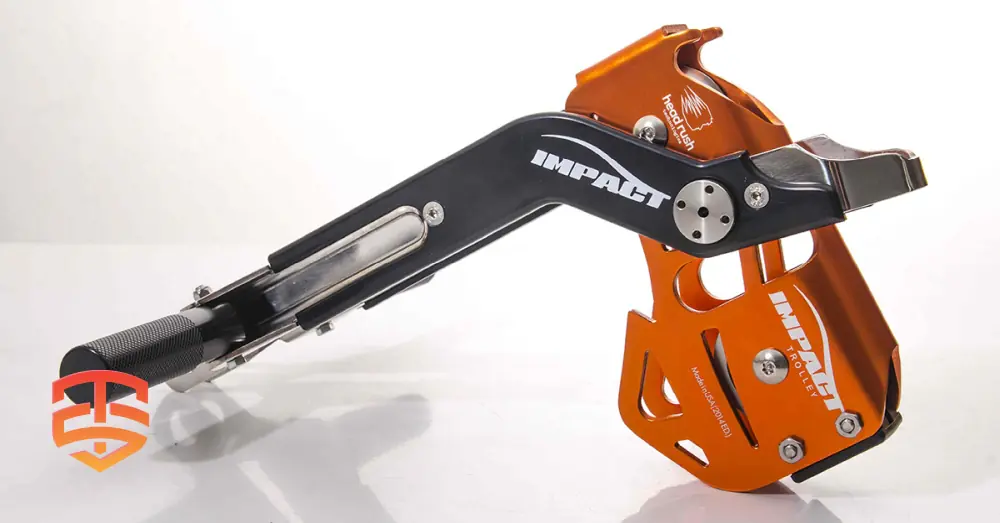
The trolley is the rider’s connection to the cable and the component that interfaces directly with the braking system at the landing end. Selecting the right trolley requires matching three variables: the cable diameter, the expected rider weight range, and the braking system the trolley will engage.
The range of commercial zipline trolleys covers different load ratings, wheel configurations, and impact resistance profiles. High-volume lines with heavy throughput place significantly higher cycle demands on trolley components than low-volume leisure lines, and the maintenance interval reflects that. Specify the trolley for the operating conditions of the line, not the minimum acceptable rating.
For operations where a separate landing-zone brake is not practical, the Mag Brake Trolley integrates an eddy current magnetic braking mechanism directly into the trolley unit. The brake engages progressively as the trolley approaches the end of the cable, slowing the rider without friction, heat, or cable wear. This removes the need for a fixed brake installation at the landing platform and is particularly relevant for multi-line operations or locations where platform space is constrained.
The primary brake
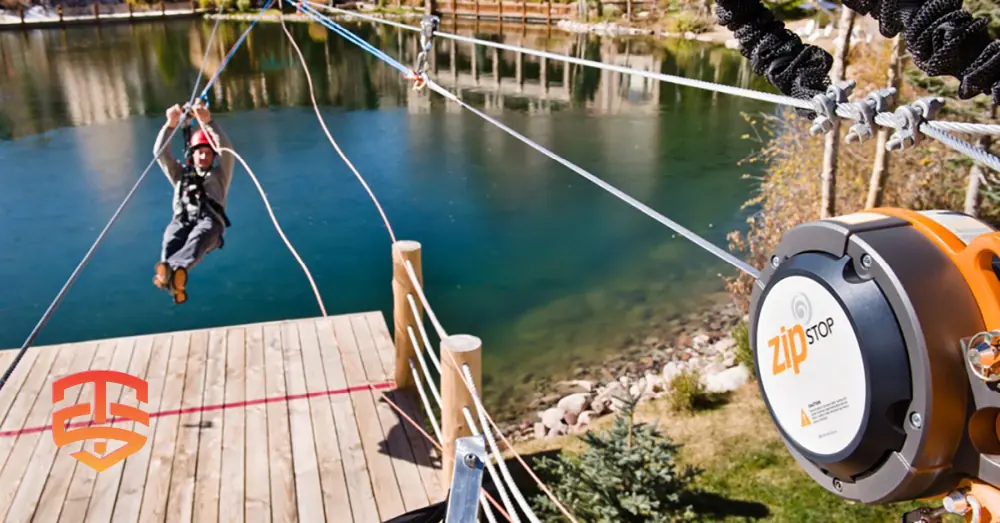
Passive braking — where the system brings the rider to a controlled stop without any action from the rider or a staff member — is the operational standard for commercial ziplines. It eliminates the most variable element in the braking chain: human response time. Staff do not need to be positioned at the landing zone to manage braking, which directly reduces the staffing requirement per line.
The zipSTOP Zip Line Brake uses magnetic eddy current braking to decelerate riders proportionally to their arrival speed — heavier or faster riders receive more braking force automatically, without mechanical adjustment between launches. The brake resets automatically after each ride, maintaining consistent throughput without a reset step between riders. Different models cover different speed and load ranges; selecting the correct model requires knowing the line’s maximum arrival velocity and participant weight range.
The emergency arrest device
An emergency arrest device (EAD) is a secondary brake that engages automatically if the primary brake fails to stop the rider before the end of the cable. It is not optional. EN 13796 and standard commercial operating practice require a secondary arrest system on all participant-carrying ziplines. An EAD that never activates in normal operation is doing its job correctly.
The Zipline Airbag EAD provides a high-visibility, cushioned arrest point that protects the rider and contains the stop within the platform zone. Sizing the EAD correctly for the cable’s maximum arrival speed is as important as sizing the primary brake. Both systems need to be tested with unoccupied loads before the line opens to participants, and the test results documented as part of the commissioning record.
Staffing and operational roles
A passive braking system reduces the staffing requirement at the landing zone, but does not eliminate the need for trained operators. The launch platform requires a qualified operator who can assess rider readiness, confirm dispatch conditions, and respond to system alerts. On multi-line operations, one operator can typically manage two or more lines simultaneously when passive braking handles the landing end.
Staff training scope should reflect the system in place. On a manually braked line, operators require braking competency and ongoing recertification. On a passive magnetic braking system, the focus shifts to equipment inspection, harness fitting, dispatch procedure, and emergency response — a faster training cycle that supports onboarding during peak season.
Inspection and ongoing maintenance
The design and installation are the start of the asset lifecycle, not the end. EN 13796 requires periodic inspection of all cableway components, and the frequency is defined in the operations manual produced at commissioning. Cable wear, trolley bearing condition, brake mechanism function, anchor integrity, and platform structure all need to be assessed on a documented schedule.
An annual zipline inspection by a qualified inspector is the minimum standard for commercial operation. Many operators supplement the annual inspection with pre-season checks and weekly visual inspections by trained staff. Keeping inspection records current is also an insurance and liability requirement — not just an operational best practice.
Planning a zipline installation? Need expert advice on zipline design?
Get started Today
Frequently asked questions
What is the minimum gradient for a commercial zipline?
There is no single minimum — the required gradient depends on cable length, participant weight range, and the braking system in use. A steeper gradient generates higher arrival speeds, which increases braking system demands. A shallower line may not generate enough momentum to complete the run under all load conditions, particularly with lighter participants or into a headwind. A pre-design simulation based on your site geometry is the most reliable way to establish viable gradient parameters before committing to a cable route.
How is rider weight range factored into the design?
Every component in the system — cable, trolley, harness, and brake — carries a rated weight range. The overall system weight range is constrained by the lowest common denominator across all components. If the braking system is rated to a lower maximum weight than the cable, the system weight limit is set by the brake. Minimum weight limits matter as much as maximum: a very light rider on a steep line may not generate sufficient speed to trigger a passive brake above its engagement threshold. Confirm the full participant weight range with your equipment supplier before finalising the design.
Can an existing zipline be upgraded to passive magnetic braking?
In most cases, yes — provided the cable and platform geometry meet the installation requirements of the brake system. The landing platform needs sufficient cable run-out for the brake to decelerate participants within the rated distance, and the anchor structure needs to accommodate the brake mounting. A site assessment is required before specifying the upgrade; the brake manufacturer or a qualified installer can confirm feasibility from cable measurements and platform drawings.
What documentation is required to open a commercial zipline?
Requirements vary by jurisdiction, but typically include: a commissioning inspection report from a qualified third-party inspector, an operations manual covering normal operation, emergency procedures, and maintenance schedules, and evidence that all components meet the applicable standards (EN 13796 in Europe). Some jurisdictions require a permit or registration before the line opens to the public. Check with your local authority and insurer before completing the installation — commissioning documentation requirements are easier to plan for than to produce retrospectively.
How do you calculate riders per hour for a zipline?
Throughput is determined by ride time plus turnaround time at both platforms. Ride time depends on cable length and average speed. Turnaround time includes harness fitting, dispatch preparation, and — on manually braked lines — the time required to reset the brake and return the trolley. Passive braking systems with automatic reset and motorized trolley return reduce turnaround time significantly, which is where the throughput gain is realised rather than in ride speed itself.
The Hardware Behind a Safe, High-Volume Zipline Operation
The products below are used and specified in the techniques described above. Click any item to explore full specifications and request a quote.
How Automatic Reset Braking Keeps High-Volume Ziplines Running
Magnetic eddy-current braking with automatic reset — ideal for high-throughput commercial courses where minimising staff intervention between riders matters.
Why Modular Spring Braking Is the Operator’s Safety Baseline
The modular go-to for operators who need reliable primary and emergency arrest capability. Configurable to your specific rider weight range and arrival speed.
What It Takes to Safely Stop a Rider Arriving at 72 km/h
Engineered for mega-ziplines running at up to 72 kph. The benchmark high-velocity arrest device for operators running the fastest commercial lines.
The Prone Position: How Superman Ziplines Demand Specialist Harnessing
The specialist prone harness for headfirst Superman configurations — redesigned for faster guest harnessing and a more comfortable ride position.
Trolley Longevity vs. Arrival Speed: Why You Don’t Have to Choose
Built to absorb the impact at landing without compromising speed on the line. The choice for courses where trolley longevity and smooth arrival are both non-negotiable.
Heavy Loads, Long Runs: Specifying Trolleys for Serious Commercial Operations
ISC’s large-capacity trolley for high-load commercial operations — built to the bearing quality and durability standards that serious operators expect.
Browse the full Zipline Safety Solutions range →
-
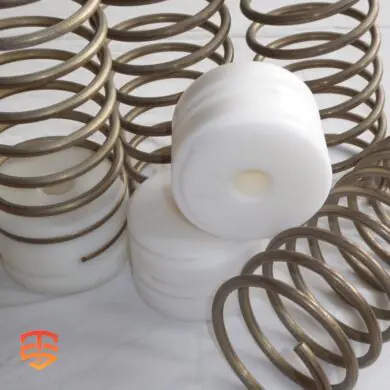 Zipline Spring Brake System | Primary & EAD Braking€ 90,00 Ex VAT
 -
Product on sale
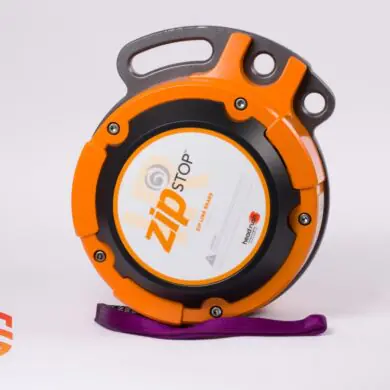 zipSTOP IR Zip Line Brake | Internal Reduction for High-Speed ArrivalPrice range: € 5.742,00 through € 5.894,00 Ex VAT
 -
Product on sale
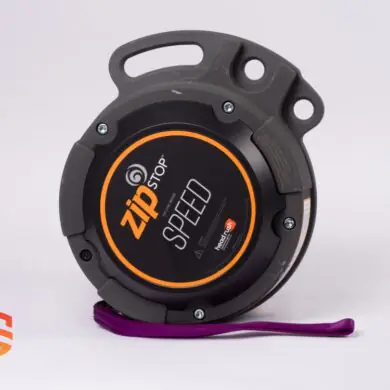 zipSTOP SPEED | High-Velocity Magnetic Braking SystemPrice range: € 6.198,00 through € 6.455,00 Ex VAT