

There is no single “auto belay law”. The safety of an auto belay wall rests on three layers: a certified device, a correct installation, and an operation that prevents climbers from starting unclipped. Inspectors and insurers look at all three. This guide sets out what each layer requires, so you can check your facility against it.
Which standards apply to auto belays in Europe?
| Layer | Requirement | What to ask for |
|---|---|---|
| Device | Certified as a descender device to EN 341:2011 Class A, and CE-marked as personal protective equipment (PPE) category III under Regulation (EU) 2016/425 | EU declaration of conformity and the user manual in your language |
| Climbing wall | Wall and anchor points built to EN 12572-1; auto belay mounted on an anchor rated for the load the manufacturer specifies | Wall certificate and mounting specification |
| Connector and webbing | Original manufacturer connectors and webbing only | Webbing serial number and replacement date |
| Operation | Written procedures, staff training, daily checks and an annual manufacturer service | Inspection logbook and service certificates |
EN 341 Class A is the class for descender devices with the highest energy absorption requirement, which is why it is used for auto belays that lower thousands of climbers a year. According to the manufacturer, TRUBLUE auto belays are tested to ten times the EN 341 Class A requirement.

Inspection and recertification
- Daily: check the webbing for cuts, abrasion and contamination, check that the carabiner locks fully, and pull the webbing down to confirm it retracts quickly and smoothly.
- Logbook: record every daily check, every incident and every part replaced. An inspector will ask for it.
- Annually: TRUBLUE auto belays need an annual service and recertification. Plan it so that enough lanes stay open, for example by servicing devices in two groups.
- Webbing: replace it when it shows wear or reaches the manufacturer’s limit. Replacement webbing comes with the connector fitted.
Preventing failure to clip
The most serious auto belay incidents happen when a climber starts without being connected. Good practice combines several measures, because no single one is enough:
- Physical barrier: a belay gate that covers the first holds, so the climber has to clip in to open the route.
- Clear connection: a TRU-CLIP connector or a dual connection on the TRU-LOCK carabiner reduces the chance of a wrong attachment.
- Warning: a TRU-ALERT height sensor gives an audible and visual alarm when someone climbs without being clipped in.
- Layout: a dedicated auto belay zone, away from lead and top-rope lanes, keeps climbers focused and avoids crossing traffic.
- People: a clear briefing for every new climber and staff who watch the start of each climb.

What to check when buying a new auto belay
- The EU declaration of conformity names EN 341:2011 Class A and the PPE regulation.
- The user weight range fits your climbers; TRUBLUE auto belays lower climbers from 10 to 140 kg.
- The webbing length matches your wall height, with a spare webbing in stock for busy periods.
- Service and recertification are available in Europe, with a clear turnaround time.
- The supplier can provide the matching gate, connector and mounting kit, so the whole lane is one system.
Why it pays off
Documented checks, gates and alarms are what insurers and inspectors want to see after an incident, and they make your floor run smoother: climbers know the routine and staff spend less time correcting mistakes. If your devices are older or from another brand, the TRUBLUE trade-in programme lowers the cost of upgrading. For how the braking systems themselves differ, read how an auto belay works.
TRUBLUE Trade-In Program!
Receive a discount when you trade up your used auto belay for a TRUBLUE iQ or iQ+. Offer also applies to competitor devices.
Get you offer!
Frequently asked questions
Which standard applies to auto belays in Europe?
Auto belays are certified as descender devices to EN 341:2011 Class A and must carry a CE mark as category III personal protective equipment under Regulation (EU) 2016/425. The climbing wall they are mounted on falls under EN 12572-1.
How often must an auto belay be inspected?
Check the webbing, connector and retraction daily before use and record it in a logbook. TRUBLUE auto belays also need an annual service and recertification.
Are auto belay gates mandatory?
The standards do not prescribe a gate, but a gate that physically blocks the first holds is the most effective measure against climbing unclipped, and inspectors look for it.
Can I use another carabiner on my auto belay?
No. Use only the connectors and webbing supplied by the manufacturer for your device; other connectors are not covered by the certification.
Want to check your auto belay wall against these points? Request a quote for gates, sensors, webbing or the annual service, and we will advise per lane.
What to Consider Before You Spec an Auto Belay System
The systems and accessories discussed above are used on professional climbing walls worldwide. Explore each to find the right fit for your wall configuration and operational setup.
Auto Belay Buying Guide: What to Look For Before You Spec a Climbing Wall
Wall height, expected cycle counts, and your inspection regime all influence which auto belay system belongs on your wall. Browse the full range of certified vertical auto belay systems for commercial climbing operations.
Why the TruBlue IQ Is the Default Choice for High-Traffic Climbing Walls
The TruBlue IQ combines magnetic braking with a speed-sensing mechanism that adjusts descent rate to the climber’s weight — delivering a smooth, controlled lowering experience for every rider regardless of size.
Speed Climbing and Auto Belay: What Changes When Every Second Counts
Speed climbing demands a faster retraction rate than recreational walls require. The TruBlue Speed is engineered specifically for competition and training walls where rapid reset between attempts is part of the format.
When to Replace Your Auto Belay Webbing — and What Happens If You Wait Too Long
Webbing is the most wear-exposed component in any auto belay system. Browse certified TruBlue replacement webbing and understand the inspection intervals that keep your units in service and your liability in check.
The Connector Your Climbers Use Every Single Session: Why It Deserves More Attention
The Tru-Clip is the interface between your climber and the auto belay system — designed for one-handed connection, misuse resistance, and the thousands of attach-detach cycles a busy wall puts it through every month.
The Sensor That Catches What Staff Can’t Always See
The Tru-Alert height sensor monitors climber position and triggers an alert when someone reaches the top unclipped. It is the operational safety net for busy walls where staff cannot maintain a direct sightline to every route at all times.
Browse all Vertical Auto Belay Systems →
-
Product on sale
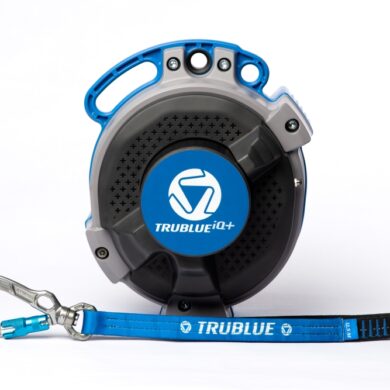 TRUBLUE iQ+ Auto Belay | Catch-and-Hold Projecting TechnologyPrice range: € 4.465,00 through € 5.157,00
-
Product on sale
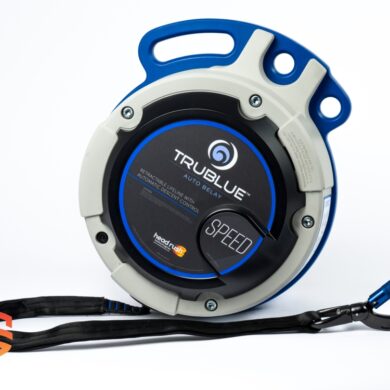 TRUBLUE Speed Auto Belay | Competition-Grade Speed Climbing SystemPrice range: € 2.845,00 through € 3.360,00
-
Product on saleTRUBLUE iQ Auto Belay – Magnetic Auto Belay System for Climbing WallsPrice range: € 2.845,00 through € 3.465,00