
Yes, on a commercial zipline you need both. A magnetic zipline trolley and an end brake do two different jobs. The trolley controls the rider’s speed on the line, before the landing. The end brake stops the rider at the platform. This guide explains what each component does, what happens without an end brake, when an emergency arrest device is needed and how to choose the combination for your line profile.
Two jobs on one zip line: speed control and stopping
Every zip line has two braking tasks. The first is to keep rider speed within a safe and comfortable range along the line, for light and heavy riders alike. The second is to bring every rider to a controlled stop at the landing. A zipline braking system that only does one of these is incomplete.
A magnetic trolley handles the first task. An end brake handles the second. They work in sequence: the trolley lowers and evens out the speed, so the rider arrives at the end brake within its safe working range. For an overview of all brake types, see the zip line brake buyer’s guide.
What a magnetic zipline trolley does on the line
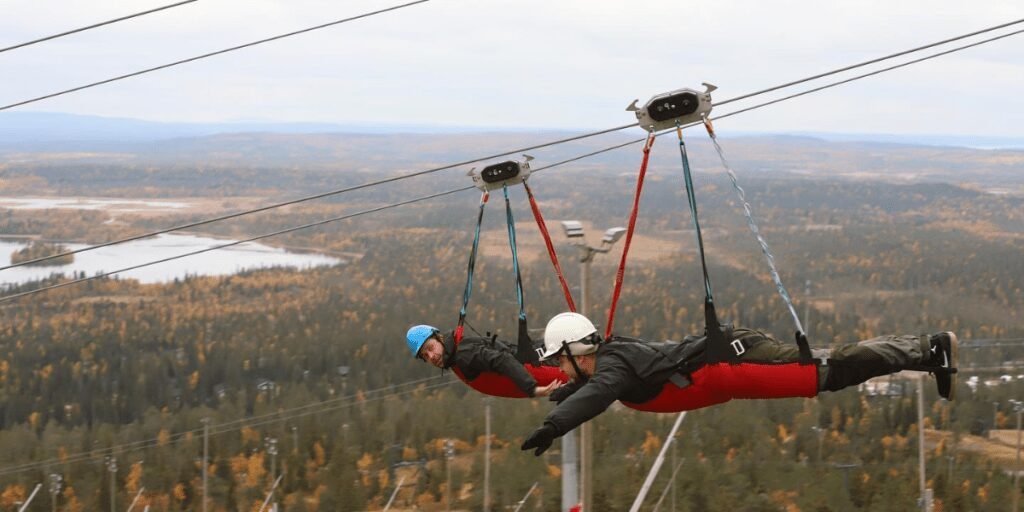
A magnetic braking zipline trolley, such as the MAG Brake Trolley, is a self-braking trolley. Permanent magnets in the trolley move past a conductive part as the wheels turn. This creates eddy currents that push back against the motion. The braking force rises with speed: small at low speed, strong at high speed. Heavier riders travel faster, so they are braked more. The physics of eddy-current braking are explained in a separate article.
The rider’s speed becomes heat inside the trolley housing. The cable is not used as a braking surface, so braking adds no extra wear to the line. What the trolley achieves:
- lower peak speed on steep or long lines;
- more consistent arrival speeds between light and heavy riders;
- less energy left at the landing, which can allow a shorter braking zone and a smaller platform;
- room for more demanding line profiles with the same end brake.
How much speed is taken off is set on request, depending on the zipline profile. What it does not do: it does not bring the rider to a stop, it does not hold a fixed maximum speed and it does not return itself to the start.
What the end brake does at the landing
The end brake is the device that actually stops the rider. It sits at the end of the line and takes the remaining energy out of the ride over a defined braking distance. Common choices are zipSTOP IR and zipSTOP Speed from the zipSTOP range, or a zipline spring brake. The differences between the zipSTOP models are explained in the zipSTOP brake guide.
Every end brake has a working range: a rider weight range and a maximum arrival speed it is designed for, according to its manufacturer. The whole point of combining it with a magnetic trolley is to keep every rider inside that range.
What happens without an end brake?
Because eddy-current braking force drops as the rider slows down, a magnetic trolley cannot stop a rider at a fixed point. Without an end brake, the rider reaches the platform with whatever speed is left, or rolls back to the low point of the cable and has to be retrieved by staff. Neither is an acceptable landing on a commercial line, which is why a magnetic trolley is always paired with an end brake.
How the magnetic trolley and the end brake work together
- Start: the rider leaves the platform and gains speed.
- On the line: the magnetic trolley brakes harder as speed rises, so peak speed stays lower and heavy riders are braked more than light riders.
- Arrival: the rider reaches the braking zone at a lower and more even speed, within the working range of the end brake.
- Stop: the end brake, for example zipSTOP IR or zipSTOP Speed, engages and brings the rider to a controlled stop. A zipSTOP catch plate is available as an option on the MAG Brake Trolley.
- Return: the end brake resets for the next rider according to its design; the trolley is taken back by staff or a retrieval system.

The landing is always designed for the worst-case arrival speed: the heaviest rider, the fastest conditions and a trolley that brakes less than expected. The magnetic trolley lowers the typical arrival speed, but it does not replace that design margin.
When do you need an emergency arrest device (EAD)?
An emergency arrest device is the backup that stops the rider if the main brake fails, is not reset or is overrun. Whether a line needs one follows from its design, its risk assessment and the requirements of the inspection body; EN 15567 is the usual reference for zip lines in adventure parks. A magnetic trolley is not an EAD, because it cannot stop a rider. A zipline spring brake can serve as the primary brake or as an EAD once the braking system is engineered and tested for the installation.
How to choose the combination for your line profile
The right pairing of trolley and end brake depends on the line itself. Send these data with your quote request, so the trolley and the end brake are matched:
| Line data | Why it matters |
|---|---|
| Length | Long lines build up more speed and benefit most from speed control on the line. |
| Height difference or gradient | Sets how much energy the rider carries towards the landing. |
| Rider weight range | Sets the spread between the lightest and heaviest rider (MAG Brake Trolley: 25–125 kg). |
| Harness position | Sit or Superman riders have different air resistance and speed. |
| Cable diameter | The trolley must fit the cable (MAG Brake Trolley: 10–18 mm). |
| Target arrival speed | The speed at which every rider should reach the end brake. |
| End brake type and throughput | Decides which end brake and which reset fit the dispatch interval. |
On short, gentle lines where every rider already arrives within the end brake’s range, the end brake alone may be enough. A magnetic trolley earns its place on long or steep lines, with a wide rider weight range, or when the landing has to stay compact. How to set up the trolley itself is covered in the configuration guide for the self-braking magnetic zipline trolley; the design factors behind arrival speed are in zip line rider speed.
Magnetic trolley vs. end brake at a glance
| Magnetic zipline trolley | End brake | |
|---|---|---|
| Role | Reduces and evens out rider speed | Stops the rider |
| Where it acts | Along the whole line, before the landing | In the braking zone at the end of the line |
| What it needs | A matching cable diameter and a setting for the zipline profile | A design for the worst-case arrival speed and rider weight range |
| Can it stop a rider? | No | Yes |
| Inspection | Daily check of wheels, housing and fixings; logbook; annual inspection | Daily check of braking line, reset and catch; logbook; annual inspection and service |
Inspection of the trolley and the end brake
Both components are part of one braking system, so check them together. Follow the manufacturer’s instructions for each device:
- Daily: trolley wheels turn freely, housing and fixings are intact, no rubbing parts; end brake braking line, reset and catch work as intended.
- Arrival speed: measure it at commissioning and after changes, with light and heavy riders, for example with a Bushnell speed gun.
- Logbook: record checks, measured speeds and any defects; take a device out of service when it fails a check.
- Yearly: book annual zipline inspections for the complete line and the zipSTOP annual service for zipSTOP brakes.
Plan a new line or an upgrade? Request a Quote with your line data for a MAG Brake Trolley and an end brake matched to your zipline profile, or browse all zipline trolleys and zipline braking systems.
Frequently asked questions
Do I need an end brake with a magnetic zipline trolley?
Yes. A magnetic zipline trolley controls rider speed on the line, but it does not bring the rider to a stop. An end brake such as zipSTOP IR, zipSTOP Speed or a spring brake stops the rider at the platform. The two are always used together.
Can a magnetic trolley stop a rider on its own?
No. Eddy-current braking force rises with speed and falls as the rider slows down, so it cannot hold a rider still or stop them at a fixed point. Stopping is the job of the end brake.
Can I use an end brake without a magnetic trolley?
Yes, on lines where every rider, from the lightest to the heaviest and in the fastest conditions, arrives within the working range of the end brake. On long or steep lines, or with a wide rider weight range, a magnetic trolley lowers and evens out the arrival speed first.
Which end brake works with the MAG Brake Trolley?
The MAG Brake Trolley is used with an end brake such as zipSTOP IR, zipSTOP Speed or a zipline spring brake. A zipSTOP catch plate is available as an option. Your zipline designer confirms the combination for the line profile and the worst-case arrival speed.
Is a magnetic trolley an emergency arrest device (EAD)?
No. An EAD is a backup that stops the rider if the main brake fails or is overrun. A magnetic trolley only reduces speed on the line, so it cannot take that role. Whether a line needs an EAD follows from its design and risk assessment.
How much speed does a magnetic trolley take off?
That is set on request and depends on the zipline profile: length, gradient, rider weight range and target arrival speed. The landing and the end brake are always designed for the worst-case arrival speed.
Does a magnetic trolley get hot or wear the cable?
The braking energy becomes heat inside the trolley housing, so the housing warms up during use. The cable is not used as a braking surface, so magnetic braking adds no extra wear to the line.
How do I inspect the trolley and the end brake?
Check both every day before opening, following the manufacturer’s instructions: the trolley’s wheels, housing and fixings, and the end brake’s braking line, reset and catch. Record the checks in the logbook and have the complete zip line inspected at least once a year by a competent inspector.
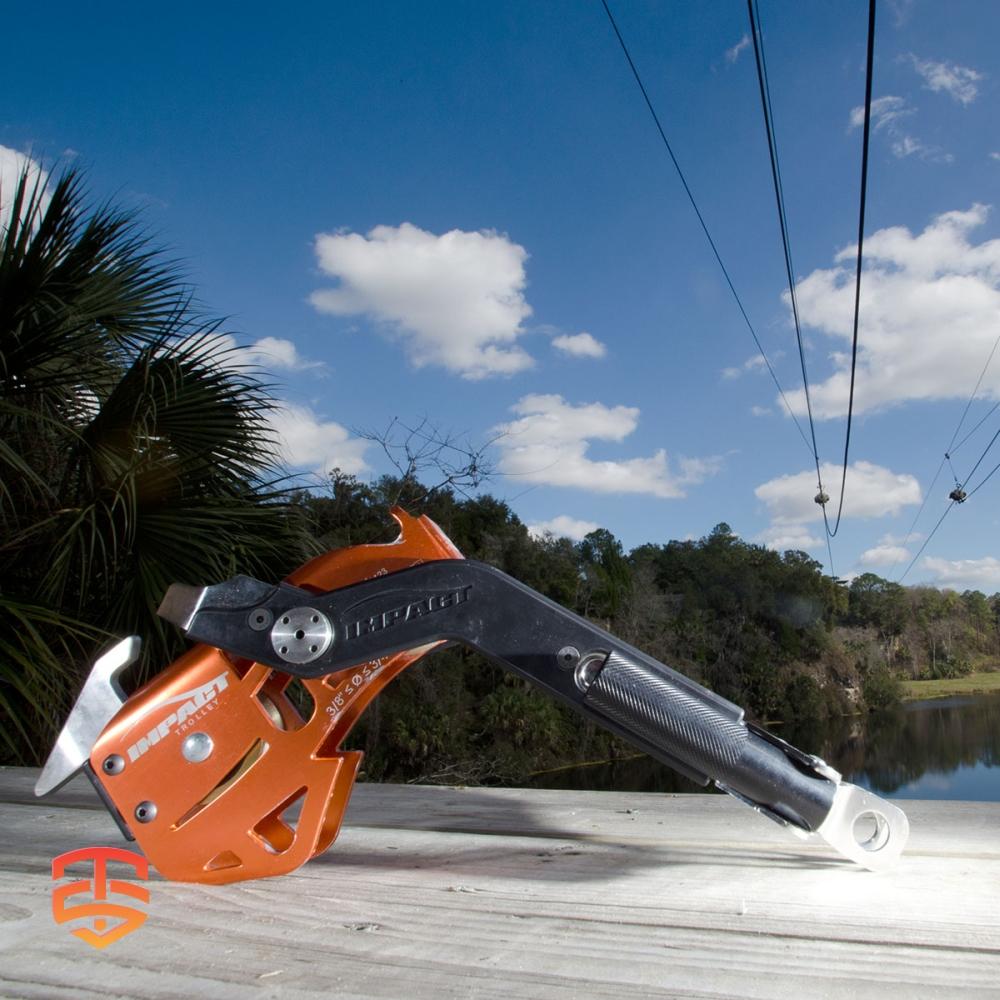
Commercial Zipline Trolleys
The right trolley decides how fast you can dispatch riders and how much wear your line and brakes take. Every trolley here is built for commercial use, with high-speed bearings and housings designed for repeated impact braking.
Choose the LightSpeed Impact Trolley for high-throughput lines, the ISC ZipSpeed range for everything from Clip’n’Zip parks to high-speed XTREME lines, or the EZ Clip and Micro Trolley for fast one-handed clipping on shorter lines. Handlebars, lanyard kits and anti-rollback cams are listed below. Request a quote with your cable diameter, line length and expected speed.
The Hardware Behind a Safe, High-Volume Zipline Operation
The products below are used and specified in the techniques described above. Click any item to explore full specifications and request a quote.
How Automatic Reset Braking Keeps High-Volume Ziplines Running
Magnetic eddy-current braking with automatic reset — ideal for high-throughput commercial courses where minimising staff intervention between riders matters.
Why Modular Spring Braking Is the Operator’s Safety Baseline
The modular passive brake for operators who use it as primary brake or as emergency arrest device (EAD), once engineered and tested for the installation. Sizing for rider weight range and arrival speed is done by your zipline engineer.
What It Takes to Safely Stop a Rider Arriving at 72 km/h
Engineered for mega-ziplines running at up to 72 km/h. The benchmark high-velocity arrest device for operators running the fastest commercial lines.
The Prone Position: How Superman Ziplines Demand Specialist Harnessing
The specialist prone harness for headfirst Superman configurations — redesigned for faster guest harnessing and a more comfortable ride position.
Trolley Longevity vs. Arrival Speed: Why You Don’t Have to Choose
Built to absorb the impact at landing without compromising speed on the line. The choice for courses where trolley longevity and smooth arrival are both non-negotiable.
Heavy Loads, Long Runs: Specifying Trolleys for Serious Commercial Operations
ISC’s large-capacity trolley for high-load commercial operations — built to the bearing quality and durability standards that serious operators expect.
Browse the full Zipline Safety Solutions range →
-
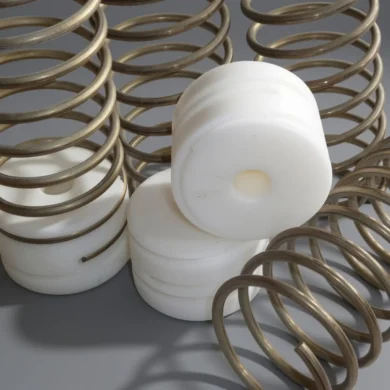 Zipline Spring Brake | Primary or Emergency Brake (EAD)€ 90,00
-
Product on sale
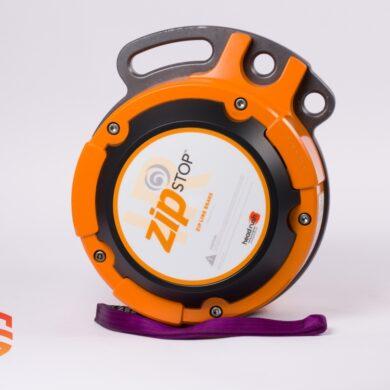 zipSTOP IR Zip Line Brake | Internal Reduction for High-Speed ArrivalPrice range: € 5.742,00 through € 5.894,00
-
Product on sale
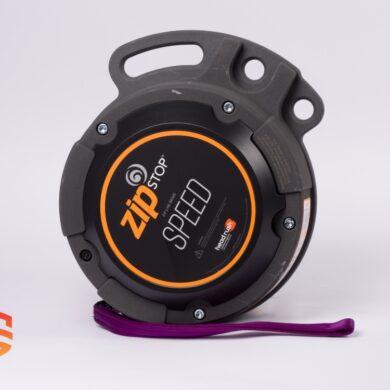 zipSTOP SPEED | High-Velocity Magnetic Braking SystemPrice range: € 6.198,00 through € 6.455,00